
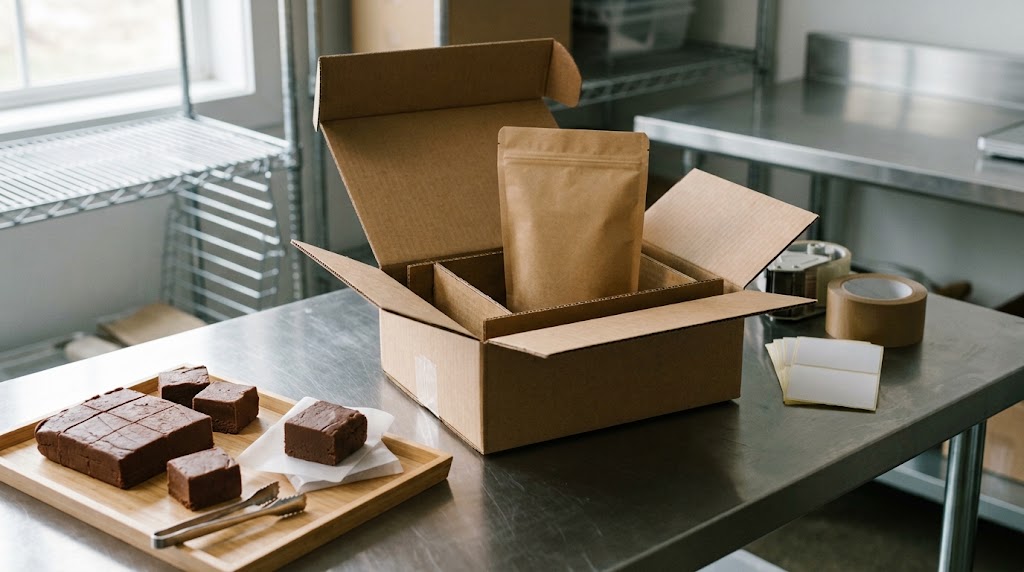
To package fudge for shipping, start with fudge already made and held under the food producer's established conditions. Confirm its piece-level contact wrap or separator, then its filled and initially sealed retail pouch. Add a support that carries load without pressing on the fudge. Restrain that complete retail unit within a parcel carton. If the recipe and route require temperature control, develop and check a separate thermal shipping arrangement. Trial the actual order size and journey, then open the returned or received parcel in layers: carton, support, retail bag, individual wrap and cut face. Decide whether it passed from the condition of the fudge, not merely from an unbroken box.
This is a commercial packing and validation guide for fudge eaten by people. It does not declare every fudge suitable for ambient delivery, prescribe a universal ice-pack count or replace the producer's food-safety plan. The general candy-shipping guide covers multi-candy carton setup, sizing and routine dispatch steps. Here the questions are narrower and deeper: where does a dense but easily marked confection fail, which layer caused the change, and what evidence would justify changing the design?
Define the Product and the Arrival Standard First
“Fudge” is not a single shipping specification. Compare the recipe and finish as sold: a small plain square, a slab, a nut-studded portion, a coated bite, or several flavors in one pack. A smooth cut face exposes transfer and pressure marks that a rougher inclusion surface may hide. A thick slab can remain intact at the top while its underside takes an imprint. Different portions with the same net weight can move differently in the bag.
Make a trial brief for every SKU that may need a distinct shipping arrangement. Include the product's actual approved storage route, normal packing condition, finished portion dimensions, contact wrap, retail bag, pieces per unit and order quantities. Do not infer a safe room-temperature route from sugar content or from an outer pouch described as “high barrier.” The FDA's water-activity technical guide explains that water activity is relevant to food stability. It does not establish the safety, quality period or travel temperature for a particular untested fudge recipe.
Write the arrival standard before sending samples. “Looks good” leaves too much room for interpretation. Photograph a reference portion from normal production under ordinary lighting. Describe the acceptable cut edge, coating, shape, aroma and wrapper release. Define which defects reject a saleable unit and which trigger further review. The business's food-safety team defines safety-related limits; the packaging trial measures whether the shipment stays within its established conditions and meets the stated appearance and handling goals.
| Trial variant | Distinct risk to represent | Arrival evidence to compare |
|---|---|---|
| One plain square | Exposed cut face, individual-wrap release and small-unit movement | Peel behavior, edge shape, surface transfer |
| Multipack of squares | Piece-to-piece pressure and settling at the bottom | Imprints by layer, dividers displaced, bottom pieces compressed |
| Large slab or bar | Weight carried by a broad base and risk of bending on removal | Underside marks, support stiffness, corners and lift-out action |
| Nut or coated version | Protrusions, fragile coating or loose particles | Abrasion, puncture risk, coating loss, contaminated seal area |
| Mixed assortment | Different textures, portion heights and identity/label control | Worst-contact pair, order of pieces, correct flavor and allergen version |
Run the comparison with ordinary production pieces, including natural size variation. A carefully chosen display square is useful for a Hero photograph; it is a poor sole test sample. Retain a same-batch, unshipped control under the product's established storage conditions. If the shipped and retained pieces change in the same way, the journey may not be the only cause.
Trace Damage Back Through the Packaging Layers
A complaint such as “the fudge melted” can describe several different observations: a piece lost its edges, fat or syrup marked the wrap, a coating smeared, or the whole pack arrived warm. Start with what is visible and where it appears. A sound outer carton does not exclude internal compression. A torn pouch may result from a support corner pressing into it, not from the fudge itself. A sticky cut face may reflect a material mismatch, a product-state change, pressure or a route temperature excursion.
| At-receipt finding | First layer and evidence to inspect | Useful comparison before changing the pack |
|---|---|---|
| Box intact; lower pieces flattened | Piece arrangement, support under the stack, movement and load path | Top versus bottom pieces; retained control; one-pack versus full-order trial |
| Wrap lifts away with fudge attached | Contact face, fold pressure, product state and storage history | Same-batch control opened at the same time; alternative approved wrap |
| Decoration or coating transferred | Contact sheet and neighboring portion, orientation and rubbing | Location of matching mark on wrap; shipped versus unshipped unit |
| Pouch top seal creased or contaminated | Filling, wrap ends, loose crumbs or oil in the seal zone | Pre-seal photos, rejected units and production seal samples |
| Side or corner of pouch scuffed | Support edges, neighboring packs and carton movement | Location of matching hard edge or repeated impact mark |
| Paper divider wet or label lifting | Any cold source, condensate route, incoming pack temperature | Inspected coolant arrangement and temperature/handling record |
| Product softer than the reference | Actual route exposure, product condition and packaging pressure | Time-temperature record near the product; same-batch retained control |
These are leads, not automatic diagnoses. Photograph the unchanged package before removing each layer. Ask whether the defect is local to a corner, repeats across lower units, or appears in every SKU of the batch. The pattern tells you which variable deserves a controlled trial. Replacing the film because one square looks dented may leave a structural problem untouched.
Protect the Portion Without Confusing the Layers
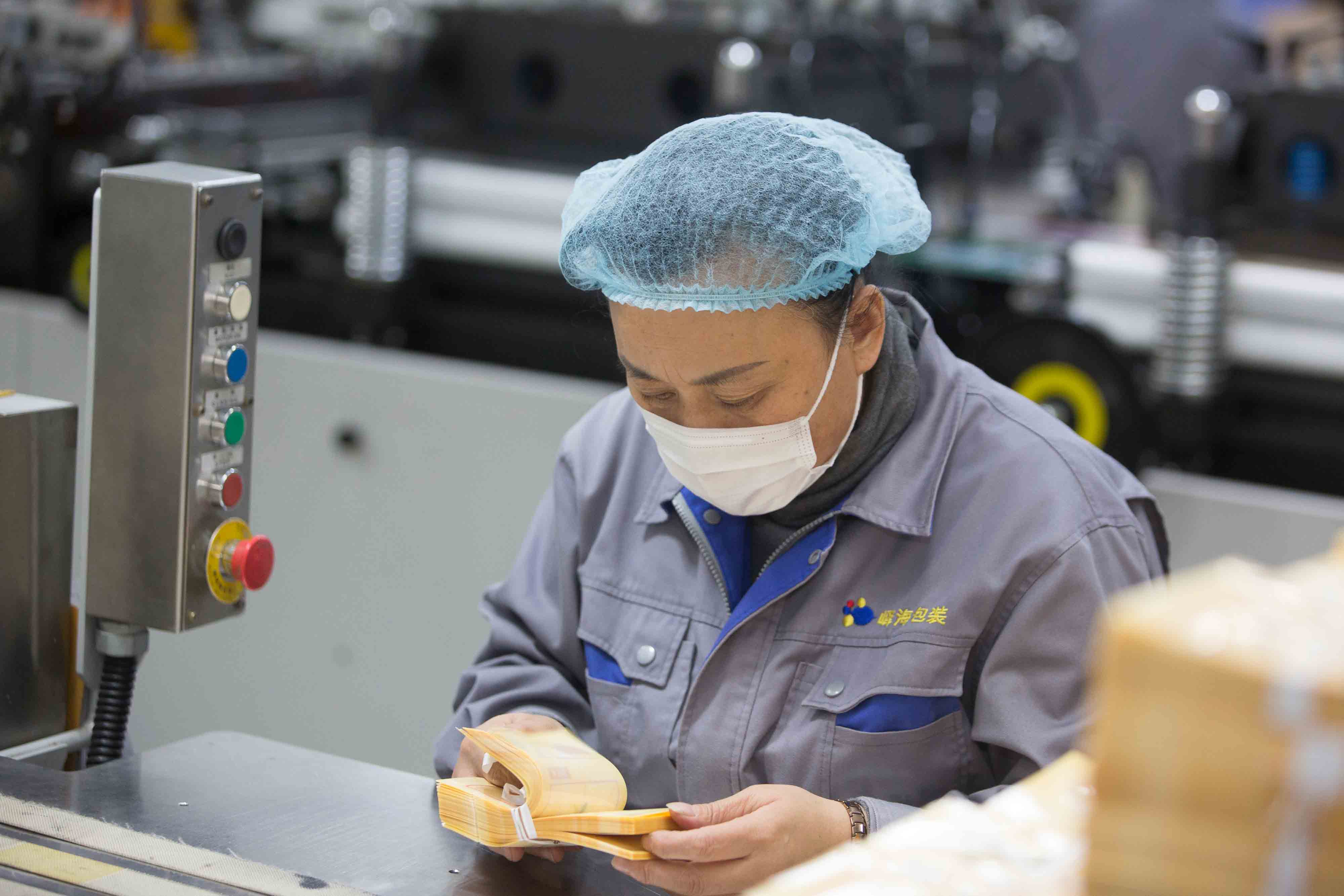
The first material against the food must suit its intended contact. A folded piece wrap, liner or separator can reduce rubbing among fudge portions, but it may itself pull product away when opened. Review the exact material, side and contact conditions for the food and destination market. For a U.S. illustration, the FDA explains that food-contact material components need an appropriate status for their intended use. That guidance does not approve an unidentified candy paper. The producer and material supplier should establish the actual documentation.
Before a shipping trial, check the wrap at two different moments: shortly after packing and after the proposed holding period under the intended conditions. Open a representative piece without scraping a cut face. Record sticking, product transfer, oil marks, particles and shape change. If that part already fails without a journey, a stronger box is unlikely to fix it. A separate wrap-focused development program can optimize the contact material and fold; the shipping trial asks whether the approved wrapped unit remains acceptable after route exposure and load.
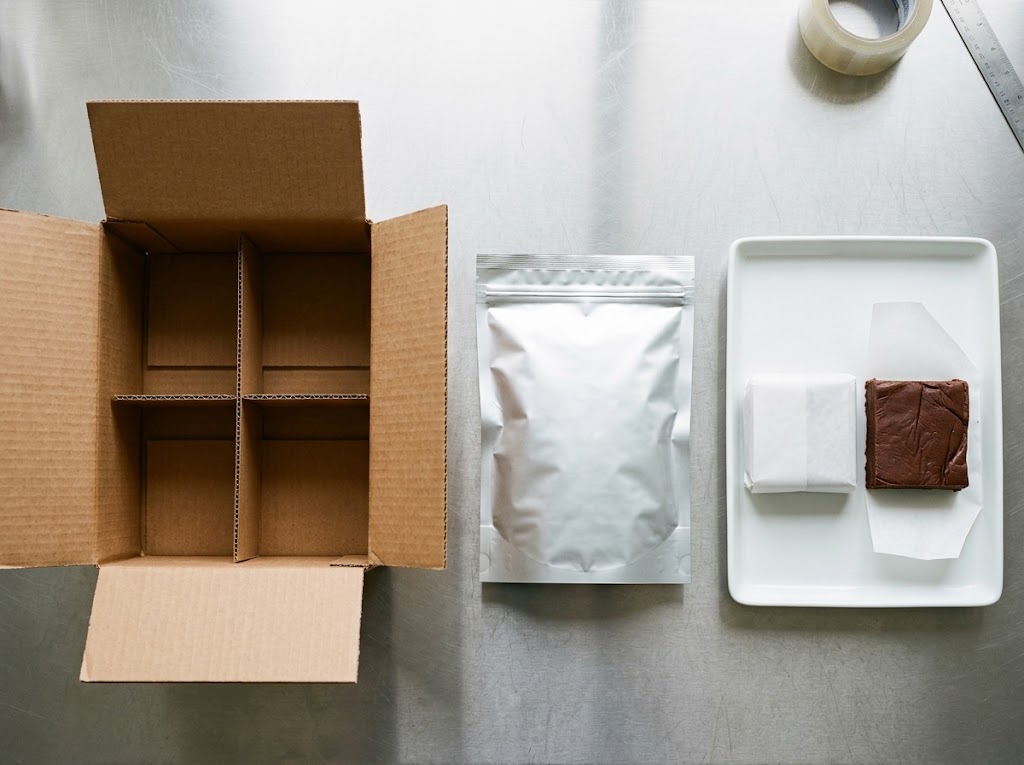
For several squares, arrange them so that the weight of a second layer is carried by an appropriate divider or support, not directly by the surface of a soft piece. Avoid an interleaf that drifts into the pouch seal or a stiff insert corner that rubs a bag panel. Where a support contacts food, it also needs an appropriate food-contact review; calling a part “carton support” does not exempt it if it actually touches the product. Identify each contact face in a drawing before the trial.
For a slab, inspect its broad underside after lifting it out. A support that seems solid inside the bag may be awkward to remove or can cut into the slab edge when grasped. Trial the complete sequence with the wrapped slab and the outer pouch. Do not assume the pouch can serve as a structural tray: flexible film can conform to a load and transmit pressure to the confection even while the pouch itself remains unbroken.
Make the Retail Pouch a Reliable Food Pack
The retail bag is the food unit that enters the parcel. It needs the right size for the wrapped and supported fudge, the specified food-facing layer, a practical opening path and a reproducible first closure. Measure after all wraps, dividers and supports have been assembled. Note bulky folds, sharp corners, labels and any display window. Fill a few sample pouches at normal packing pace, not only one carefully arranged mockup.
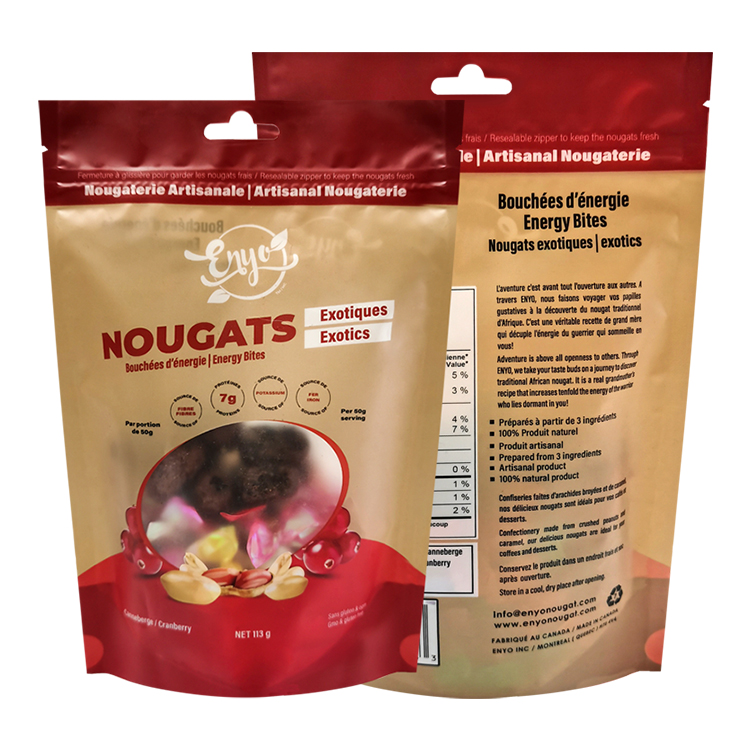
Mylarbag's published nougat and energy-bites stand-up pouch is a real adjacent confectionery example. The page lists MATOPP/PET/PE, digital printing, a shaped window, a hang hole and a nominal 14 × 21 + 4 cm project size. It does not report a fudge shipment, a tested inner wrap, a transit trial or a result that can be transferred to this recipe. Use the case to discuss actual outer-pouch features and sample questions, not to borrow a size or a claimed quality period.
Check movement inside the bag
A large headspace can let separate wrapped pieces rotate, settle and press into one another. An over-tight pouch can flatten edges when it is closed or squeezed in the carton. There is no universal “correct amount of air” for fudge. Compare physical samples with the intended piece count and orientation. Shake or handle them only as defined in the trial plan, then open to see where pressure marks occur. If a window is used, check whether wraps hide the product, whether the window remains intact film and whether corners rub that panel.
The pouch format matters less than the filled result. A flat pouch may suit a slim supported slab or small count; a stand-up pouch may suit a group intended for display. Either can fail when the usable interior, gusset or top-seal land is guessed from nominal weight. Ask a custom fudge pouch supplier for representative constructions and physical samples after you send the wrapped dimensions and actual fill pattern. That request is more useful than asking for “the best fudge bag” without a product brief.
Preserve the initial seal
Keep folds, loose support, sugar crumbs and visible oil away from the top-seal zone. Check the actual filled pack before and after the first seal. An intentionally reclosable zipper, if used, belongs to the consumer's experience after first opening; it does not substitute for a specified unopened heat seal. Inspect a run of production-representative samples for channels, folds, misalignment and opening damage.
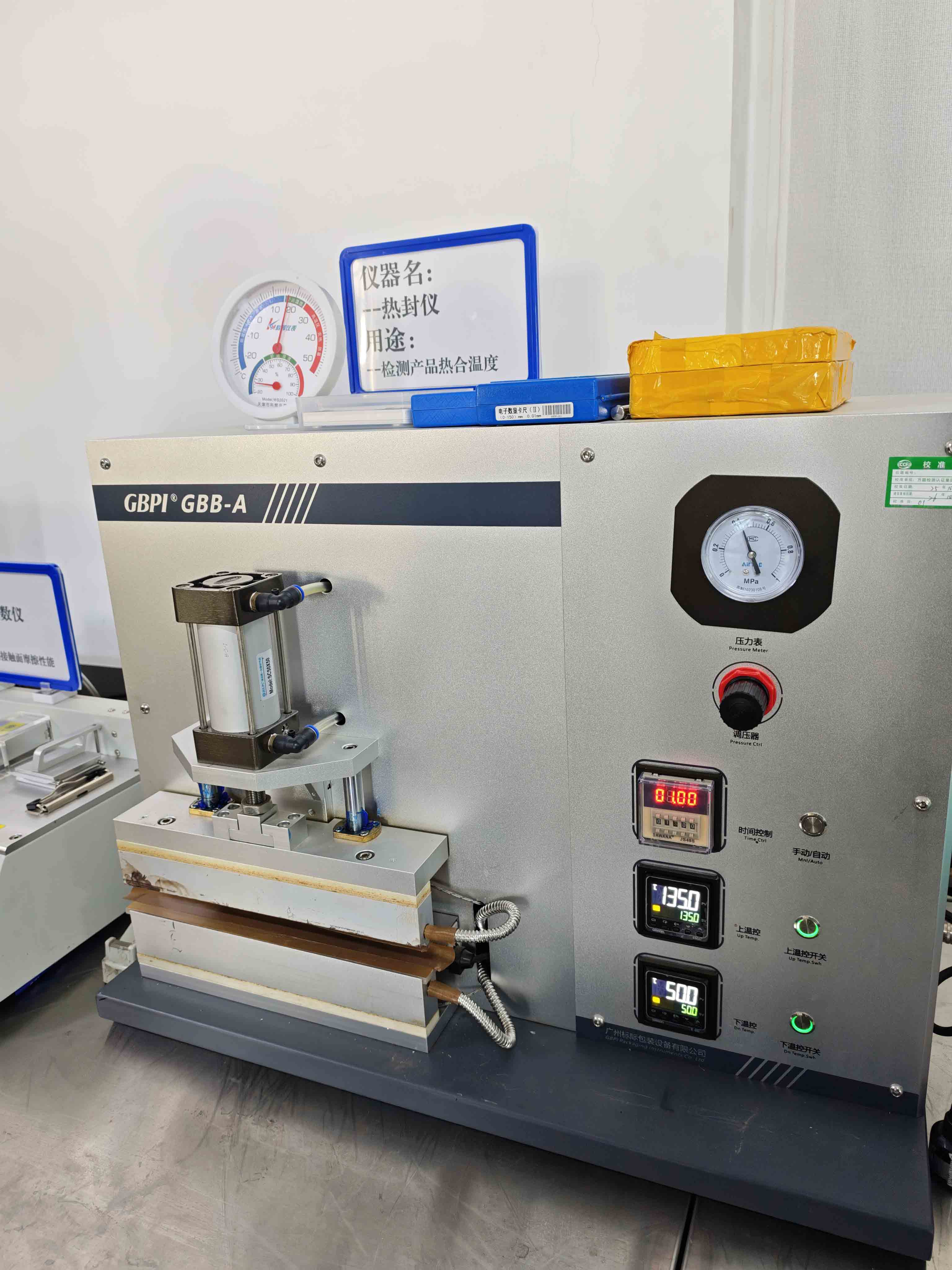
ASTM F88/F88M-23 describes a method for sampling seal strength in flexible barrier materials. That measurement does not, by itself, prove that every bag is leak-free, that the filled bag survives the route or that the product's quality period has been established. Use appropriate filled-pack checks and a documented production acceptance plan as well as any material test. If a return shows a torn seam, compare it with retained line samples, the support location and transport record before blaming one variable.
Test Mechanical Hazards as a Complete Shipment
Build the mechanical test around the actual retail units, support and order count. Identify how vertical load reaches the lower fudge pieces and where a sideways movement stops. A carton can restrain the outer pouches while individual pieces still move inside them. A neat divider can separate pouches yet concentrate force at a corner. The goal is to protect the product's shape, not simply to prevent a box wall from denting.
For each approved order size, photograph the loading pattern before closing the parcel. Include the real number of retail units, inserts and void-filling components. Trial the smallest and largest expected arrangements if their internal movement differs. Change one element at a time when an arrival defect appears: portion orientation, divider position, support stiffness, pouch fit or carton layout. Do not compress the fudge to make a preferred carton dimension work.
ISTA describes Procedure 3A as a general simulation for individual packaged products sent through parcel delivery, with transport motions and forces such as vibration and drops in its 3-Series framework. Selecting a procedure, conditioning, samples and product-specific acceptance criteria requires the actual shipment brief and a competent test plan. A laboratory result for one parcel configuration cannot be extended to every order size, seasonal route or fudge recipe. It is also not a food-safety determination.
Route trials add a different kind of evidence. A real parcel can experience collection waits, sorting, last-mile handling and a recipient's delay before opening. Record that sequence, not just the promised transit time. Compare damage location in the delivered sample with controlled retained units and, if useful, with a laboratory mechanical test. If only the top pouches scuff, the cause may differ from a uniformly flattened bottom layer. The result should tell you what to adjust.
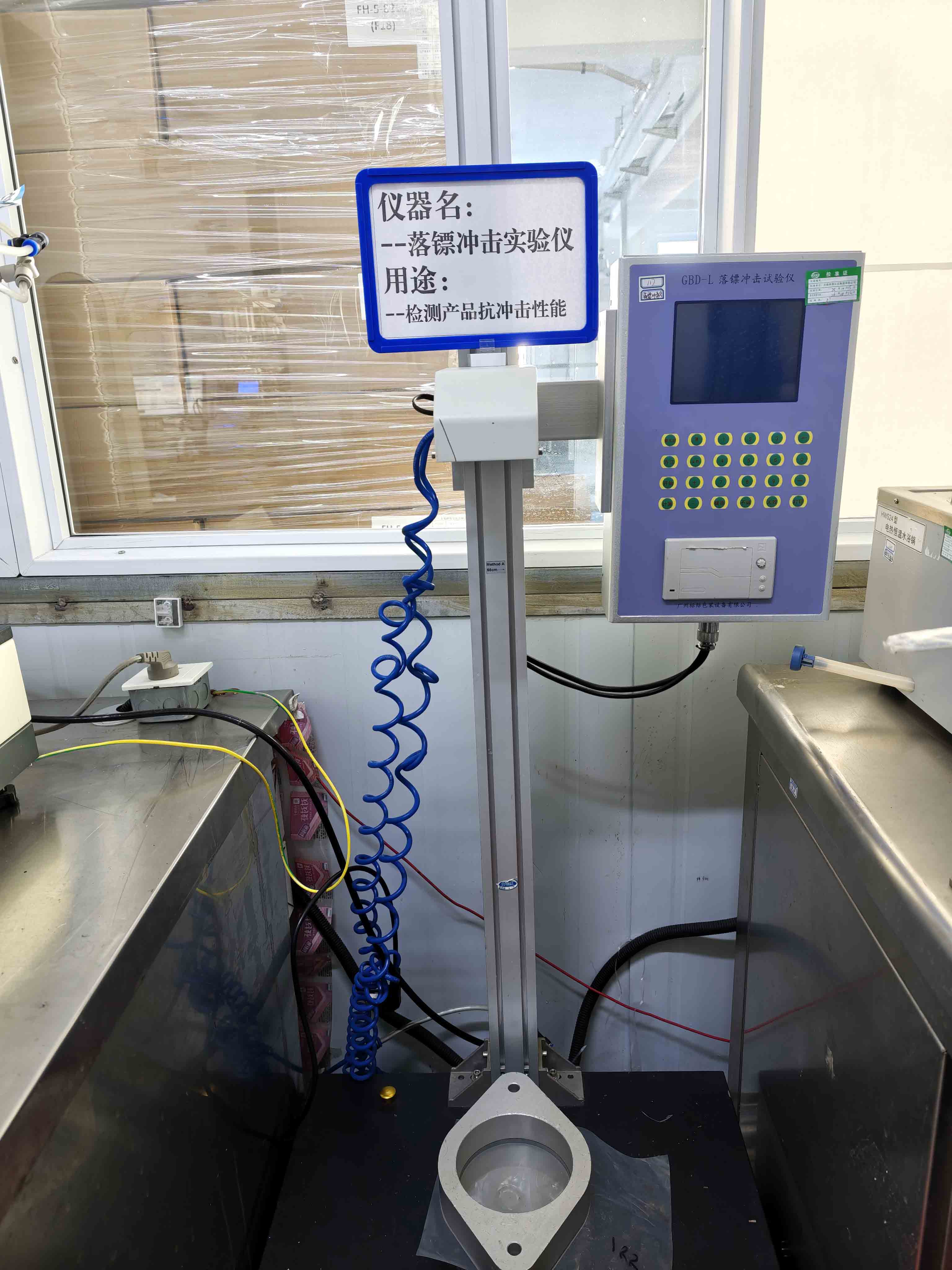
Film-level tests can help characterize a proposed material, but they are one small part of a shipment. A puncture-resistant panel cannot stop a heavy slab from bending. A carton that passes a handling test can still contain an inner pouch with a contaminated seal. Keep a result attached to the level at which it was measured: film, pouch, retail unit, shipping assembly or food. This separation prevents a convincing machine photograph from being turned into an unsupported claim about delivery.
Evaluate Temperature Exposure Separately
Mechanical cushioning and thermal protection solve different problems. A pouch advertised as moisture or oxygen barrier does not hold the product at its dispatch temperature. Insulation without an appropriate route trial does not establish that a perishable recipe stayed within its producer's required limits. Conversely, a product approved for its intended ambient route still needs a mechanical and appearance check. The food business must establish which storage and transport requirements apply to each recipe before choosing a coolant or claiming a quality period.
Start with an exposure timeline: product condition before packing, time waiting for collection, carrier handling, any depot delay, last-mile delivery and the time until the recipient brings the package inside. Consider the seasons and service patterns the business actually uses. A route estimate is not a measurement of the food. When temperature control is needed, choose the insulation and coolant as one system, then record a relevant time-temperature profile near the product under representative conditions. Inspect both food quality and whether the specified limits were maintained.
ISTA's thermal standards page describes 7E as a testing standard for thermal transport packaging in parcel delivery and distinguishes general profiles from customized lane qualification. It is useful background for designing an insulated-container test; it is not a fudge-specific limit or evidence that this recipe is safe to ship. Match any test profile to the actual food requirements and route. Do not quote a temperature threshold from another product category and apply it to fudge.
If a cold source is part of the design, also check its physical effects. It occupies volume and adds weight; a rigid pack can press on pouches. Moisture or condensate can weaken a paper divider, blur a label or reach an outer box. Keep the food in its intended sealed primary package, position the coolant according to the validated arrangement and photograph that layout. A single gel pack added to an untested ordinary box is not a cold-chain protocol. Dry ice has separate carrier and regulatory requirements; do not substitute it casually for gel packs.
For a softer arrival sample, ask first what changed. Compare the recorded temperature path with the product's established limits, the same-batch control and the amount of mechanical pressure. A softened, misshapen piece after a route excursion is not proof that the pouch film failed. Nor does an intact, cool-looking wrapper rule out a prior temperature problem. Use the food team's actual safety and quality criteria for disposition, and keep trial samples out of saleable stock unless the business's release process explicitly authorizes them.
Inspect the Received Order in a Fixed Sequence
A good receiving procedure preserves evidence. Photograph the closed carton on all relevant faces, including any wet patch, crush line or opening. Check the order identity and recorded receipt time. Open without cutting the retail packs, and stop after each layer for another photograph. Do not empty the whole box and then try to reconstruct where a flattened piece sat.
| Inspection stage | Record before disturbing it | What it can reveal |
|---|---|---|
| Closed carton | Condition, orientation, seal, wet marks and shipment timing | External handling clues, but not the product's final condition |
| Internal restraint | Divider and support position, voids, displaced coolant if present | Whether a load path or movement changed in transit |
| Sealed retail pouches | Lot/code, top seal, scratches, window, fold lines and pack orientation | Pouch damage, misplaced support, rubbing or seal defects |
| Individual wraps | Position, oil or moisture marks, tearing, opening effort | Contact mismatch, pressure transfer or product change |
| Fudge portion | Cut face, edge, coating, shape and the food team's allowed assessments | Whether the saleable food meets predefined acceptance criteria |
Compare these observations with a dispatch photograph and a same-batch retained control. Record which pack in the order failed. One damaged corner pouch and four acceptable inner pouches suggest a different mechanical path from five uniformly softened portions. If a sample raises a safety concern, the producer's hold and investigation procedure takes priority over sensory tasting or public presentation of the sample. A packaging supplier can provide film, seal and batch evidence; the food producer makes the food disposition decision.
The most useful arrival photograph is often the one taken before a layer is moved. It can show that a pouch was under a rigid corner or that a divider slipped. Later close-ups establish whether the wrapper or fudge was damaged. Both are needed for an engineering discussion. In a complaint, record whether the sample was already opened or handled by the recipient before the photos; avoid treating its final state as an untouched shipment.
Build a Trial Record That Can Drive a Revision
Define the test question first. “Does this exact six-pack layout keep the bottom fudge squares within our shape criterion on this intended service?” is testable. “Will our packaging protect fudge?” is too broad. Identify the product and packaging revisions, accepted route and order-size envelope, and the evidence that will count as a pass. Run more than one configuration when quantity, season or destination materially changes exposure; there is no single successful shipment that validates every future journey.
| Field | Dispatch record | Receipt or laboratory record |
|---|---|---|
| Product | Recipe/flavor version, batch, portion dimensions and approved storage instructions | Match to dispatch and retained control |
| Piece-level pack | Contact material, fold/seal version and piece count | Release, transfer, imprint or shifted wrap |
| Retail unit | Pouch construction/lot, fill, initial seal and code | Seal condition, scuffs, shape and accessible opening |
| External structure | Support, divider, coolant if relevant, carton and order count | Displacement, compression, wetting and actual retained layout |
| Journey or test | Dispatch/collection time, service, intended route or laboratory protocol | Receipt time, delays, handling/test record and deviations |
| Thermal evidence | Relevant logger identity and placement when needed | Measured profile evaluated against the producer's requirements |
| Product outcome | Reference images and predetermined acceptance limits | Cut face, form, texture and any food-team safety/quality findings |
When the trial fails, assign a likely layer, specify one controlled change and retest the condition that failed. If a divider is changed, check that it still fits the bag and that the new edge does not abrade film. If the pouch size is changed, recheck the first seal and label. If coolant is moved, recheck both temperature profile and pressure on the retail packs. Keep prior versions in the record so a production team does not accidentally revive an unsuccessful layout during a busy seasonal run.
Give the Pouch Supplier a Specific Brief
The pouch manufacturer can help with bag geometry, food-facing structure, window, material documentation, samples, printing and seal-related questions. It cannot set the fudge recipe's safe storage limit or approve an untested parcel route. Send the supplier the maximum wrapped and supported dimensions, net weight, piece count, fill method, planned first seal, destination market and storage conditions already established by the food business. Attach photos of the product and any observed damaged samples.
Ask for several realistic samples in plausible constructions. Fill and seal them with the actual fudge assembly. Report where the pouch rubs, bulges, hides the product, leaves insufficient seal land or makes the first piece hard to remove. If transit damage is at the carton/support level, engage the shipping-pack designer and route-testing team as well. The custom fudge packaging bags page is a starting point for discussing the outer retail pouch; the finished product and full parcel still need their own validation.
Check label and lot-code legibility after the proposed journey. A scuffed code can make complaints harder to trace. If flavors change, make sure the right printed pouch or applied label follows the actual contents. Do not treat the neighboring nougat case's dimensions or material as a ready-made fudge specification, and do not copy broad marketing promises about how long a bag keeps food fresh.
FAQ: Shipping Fudge
Can I ship fudge in a pouch without a box?
Do not assume the flexible pouch protects the portion from compression, puncture or rubbing. If you propose an unboxed service, evaluate that exact delivery method and finished product against your preset acceptance criteria; many retail pouches need an outer structural package. A sound seal and a stiff-looking empty pouch do not show how the filled fudge behaves when other parcels press on it.
Should each square be wrapped individually?
It depends on the piece, count and contact behavior. A separate contact wrap or appropriate divider can reduce piece-to-piece sticking, but the wrapper itself can adhere or imprint the cut face. Approve the material and its opening behavior with real fudge at packing and after the intended holding period, then confirm that the wrapped units tolerate the planned shipment.
Do I need ice packs for every fudge shipment?
No universal answer follows from the word “fudge.” The food producer determines the recipe's transport requirements. If temperature control is needed, design and test the complete insulated arrangement against those requirements and the intended route. If it is not needed for the approved route, still check product quality under realistic seasonal exposure. An ice pack alone is not proof of temperature control.
Does a metallized or foil pouch stop fudge from softening in transit?
Its appearance and barrier description are not a thermal system. Film properties may be relevant to a separately validated quality-period study, while the journey's time and temperature have to be considered on their own. Inspect the food and relevant route evidence before attributing softening to the bag.
Is a whole slab safer to send than cut pieces?
Neither format is automatically more robust. A slab has fewer neighboring cut faces but more weight on its base and can bend or imprint during lift-out. Multiple squares need separation and load management. Trial each real format with its contact layer, support, retail pouch and order quantity, then compare the receiving results.
Why is the outer box fine when the fudge is flattened?
The box may have protected itself while pressure passed through the internal packing into the product, or pieces may have moved inside a pouch. Photograph the position of every support before removing it. Compare top and bottom pieces and the same-batch retained control. This evidence helps separate load path, contact behavior and product-state changes.
Is a single successful test parcel enough?
It is evidence for the tested SKU, packing version, order count, service and exposure. It does not automatically cover another recipe, heavier order, longer delay or warmer season. Decide which untested boundaries matter, then use representative route trials or an appropriate laboratory program rather than repeating only the easiest journey.
Does passing ISTA 3A mean the fudge is safe and fresh?
No. A procedure such as ISTA 3A concerns transport-package performance under its defined mechanical simulation. Product safety, approved storage conditions and quality period require the food producer's separate evidence. Inspect the fudge after any package test, and do not turn a package result into a universal food claim.
Can a zipper replace the initial pouch heat seal?
For a retail unit requiring an unopened, sealed primary pack, design and verify the initial closure separately. A zipper is a reclosure feature after first opening. Keep fudge, wrap ends, crumbs and oil out of the seal zone, and inspect actual filled samples before they enter the parcel carton.
What should I do when a received sample feels unusually soft?
Preserve the shipment and temperature evidence, compare it with the producer's established limits and a same-batch retained sample, and have the food team decide disposition. Note whether the product also took a pressure imprint. Do not taste a suspect sample or decide it is safe from an intact bag; report the observations and isolate affected stock under the business's procedure.
Can a thicker pouch fix crushed corners?
Not necessarily. Film resistance and product support are different properties. Identify whether a hard insert, neighboring pack, unsupported load or excess movement caused the corner mark. A material change may help a puncture problem, but a tray or revised layout may be needed to protect a soft fudge face. Test the full assembly again after any revision.
What should go into a first supplier or test-lab enquiry?
Send the real SKU and storage brief, approved contact wrap, maximum filled pouch size, order counts, current carton/support layout, route and seasonal conditions, and photos of the actual defect. State the acceptance criteria and ask which materials, filled-pack inspections and parcel test methods can answer that particular question. A precise brief makes a sample or laboratory result interpretable.
Release the Shipment Against the Product, Not the Box
The practical answer to how to package fudge for shipping is to keep each job attached to its layer. A suitable contact wrap protects the portion's surface; the retail pouch contains and presents the food; an external support and carton manage loads; a separately designed thermal arrangement handles any established temperature requirement. Test the real assembly, keep a same-batch control, and inspect what the customer actually opens. If the cut face, wrapper release or food condition fails, an intact parcel is the beginning of the investigation, not proof that the design worked.