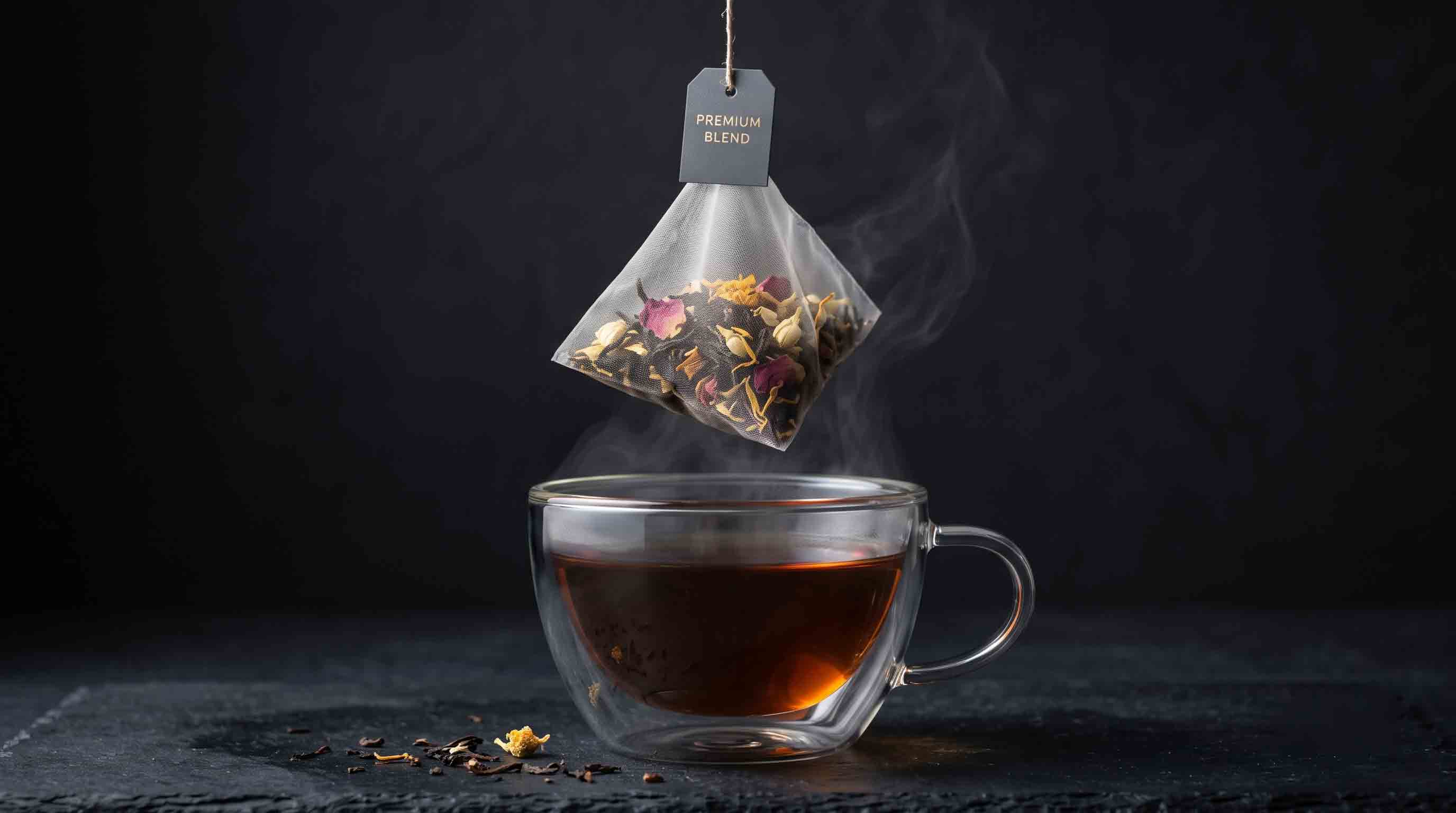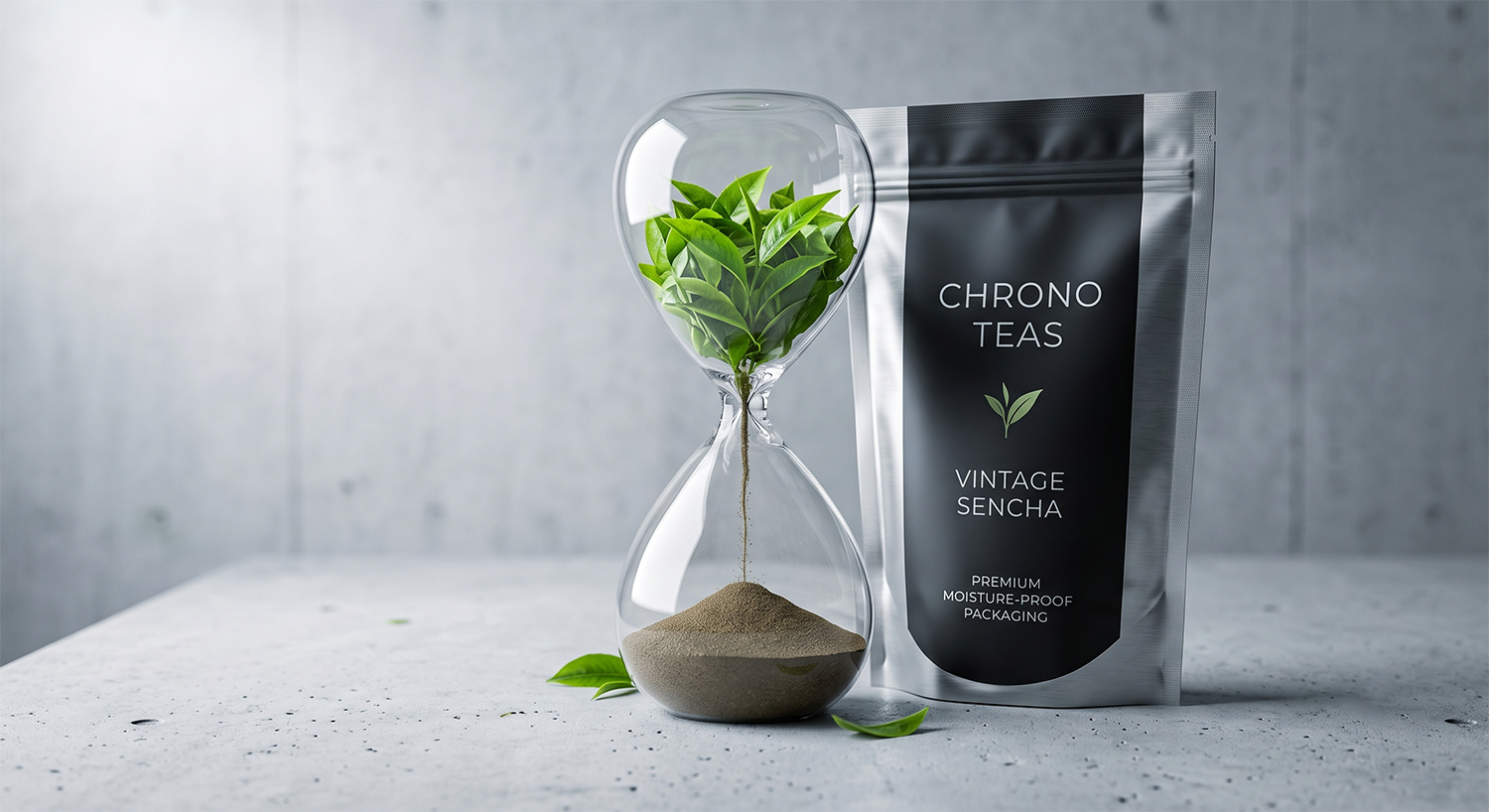
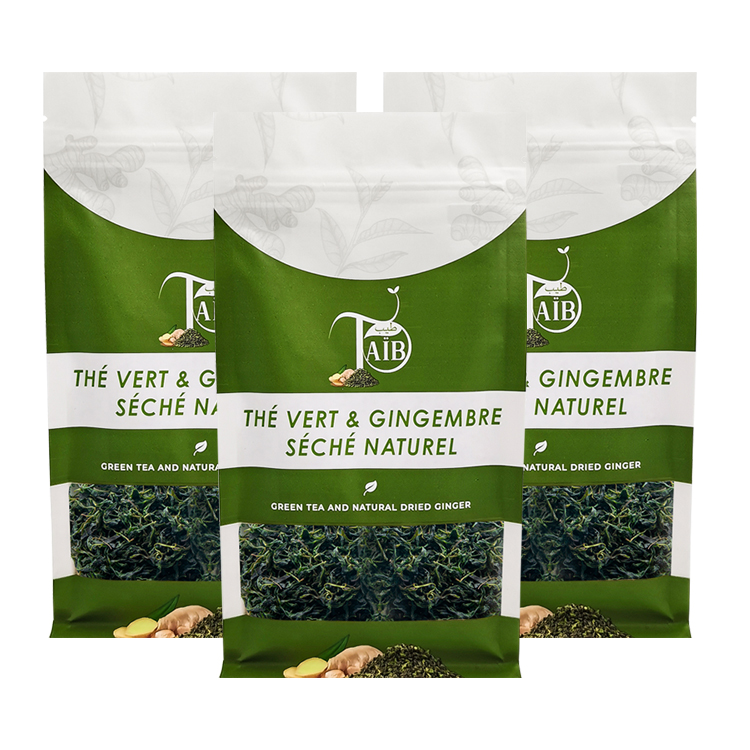
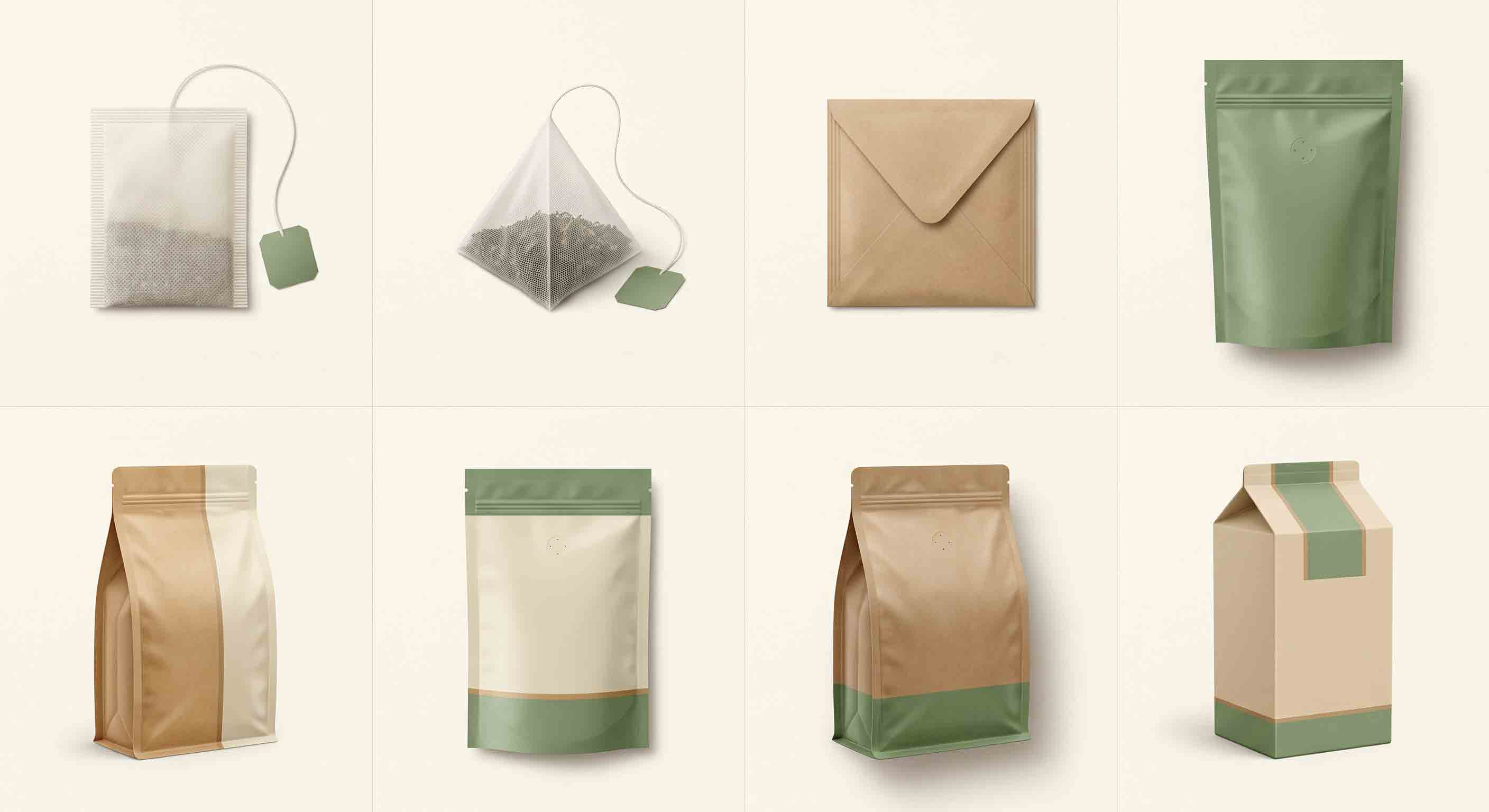
Tea packaging is not one category. A tea brand may need an inner filter bag, an individual envelope, a loose-leaf pouch, a carton, a bulk pack, or several of these in one product system. The appropriate format depends on the tea’s physical form, how the customer brews it, how many servings are sold together, the sales channel, and the production process. Choose a format by the job it must perform, then validate it with the real tea and the final artwork.
The comparison below helps teams make a format decision before buying samples or commissioning artwork. It does not make fixed claims about shelf life, food-contact compliance, recyclability, compostability, or performance; those require evidence for the exact structure and target market.
First distinguish the tea itself from the retail pack
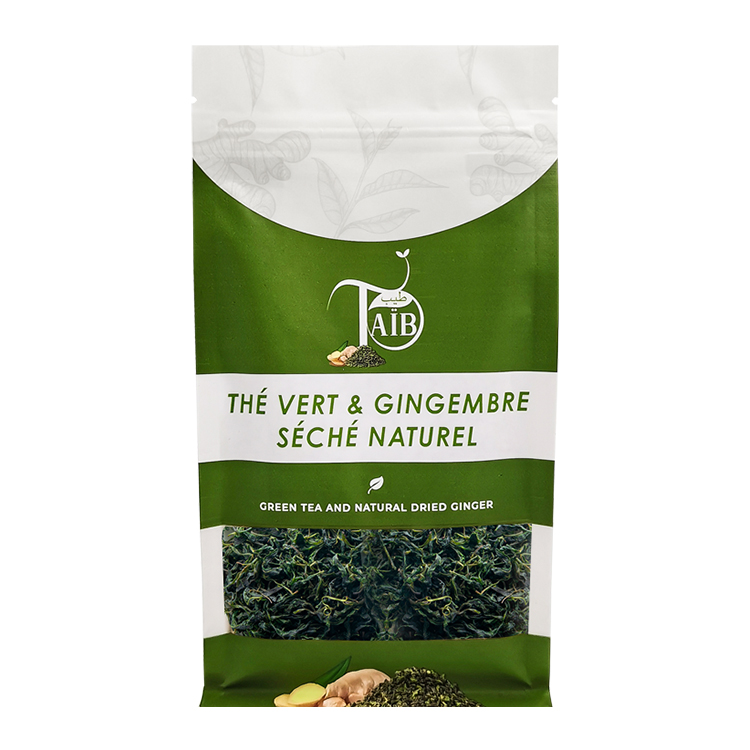
The same tea can be sold in multiple ways. A brand may sell loose leaf tea in a resealable pouch, while also selling a string-and-tag bag for hospitality use. The filter bag and the outer retail pack have different jobs. The filter bag governs the brew format. The retail pack protects, presents, carries information, and helps the customer store the product.
Separating these roles avoids vague requests such as “I need a tea bag.” A more useful brief says: “We need a single-serve filter bag with an optional outer envelope,” “We need a reclosable pouch for a 100 g loose-leaf SKU,” or “We need a carton that holds a defined count of individually handled tea bags.”
Inner tea-bag formats
Flat filter bags
Flat bags are a familiar format for finely cut tea and certain simple serving applications. The final specification should consider the tea’s particle size, intended brewed volume, filling method, sealing approach, and tag or string requirements. A flat bag is not automatically appropriate for every tea simply because it is common.
Three-dimensional sachets
Three-dimensional formats can be evaluated for teas or botanicals that require more internal volume. The decision should be based on a real sample and brew test. Do not turn a format choice into a broad safety or extraction claim unless the evidence supports that conclusion for the exact product.
String-and-tag formats
A string and tag may be useful where consumers brew the bag in a cup and expect simple removal. The attachment method, tag material, printing, and packing sequence are all part of the specification. If the product will be sold into a particular market, confirm the relevant material and labeling requirements before making claims.
Large brew bags
Large formats can be evaluated for teapots, foodservice, family-size brewing, or other larger servings. They should be sized and tested around the actual tea, water volume, and brewing instructions. A “gallon bag” is a serving concept, not a universal physical size.
Outer retail packaging formats
Stand-up pouches
Stand-up pouches can be considered for loose leaf tea, refills, sample sets, or multi-serving products where a flexible retail format is desired. They may include project-specific closures and printing options. Test the actual tea in the selected dimensions because leaf volume determines whether the pack sits and fills as intended.
Box-bottom pouches
Box-bottom pouches offer a more structured flexible-pack presentation and multiple printable panels. They can be evaluated when a product needs a distinct shelf shape or additional design space. The tea’s weight and natural volume still need to be tested; an empty pouch does not reveal how a light, irregular product will behave once filled.
Flat pouches
Flat formats can be useful for samples, travel portions, small packs, or products designed for mailing. Their lower volume means that pouch size and seal clearance need particular attention. They may also be part of a product family alongside a larger loose-leaf pouch.
Side-gusset and bulk pouches
Side-gusset or larger flexible formats may be evaluated for bulk loose leaf tea, foodservice, and higher-volume products. The appropriate closure, material, fill process, secondary pack, and display plan should be agreed before artwork is finalized.
Cartons and pouch-plus-carton systems
A carton can provide information space, gifting presentation, a defined pack count, and a way to organize tea bags or inner pouches. It may be used alone or around a flexible primary pack. A carton does not eliminate the need to consider the inner pack and its handling requirements.
Match the format to the buying situation
This is not a selection table that dictates one answer. It is a way to identify which variables matter before the project becomes expensive to change.
Consider the full packaging system
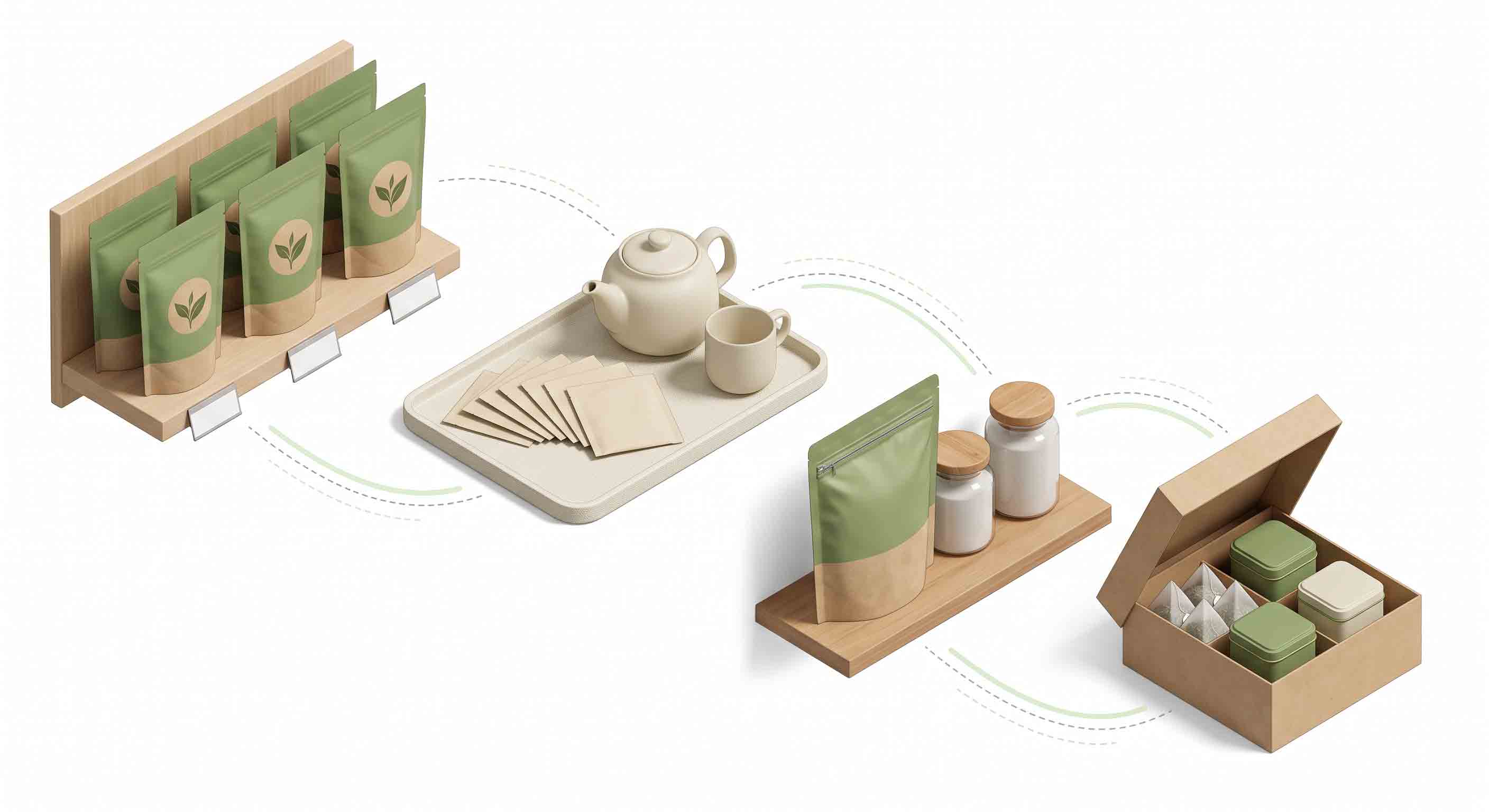
The final product often combines formats. For example:
- an inner filter bag plus an individual envelope plus a carton;
- a loose-leaf pouch placed inside a gift box;
- a stand-up pouch with a sample sachet included in a promotional set;
- a bulk pack used by a foodservice buyer and a different consumer-size pouch for retail.
When multiple layers are involved, specify the pack count, dimensions, filling order, artwork language, code area, and handling route for each layer. Do not assume the materials or claims for one layer extend to another.
Use actual product samples to select the package
The real tea—not a rendering—determines whether a format works. Test the product in the selected size and inspect it in the same way customers and packers will use it. Check product volume, opening behavior, closure usability, artwork legibility, pack count, and the relationship between the inner unit and retail pack.
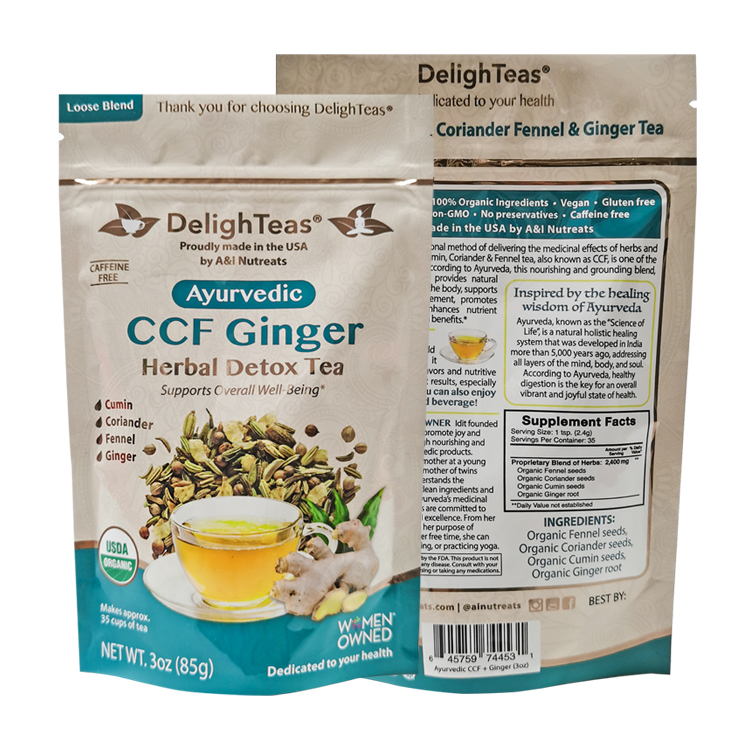
One public tea-pouch record describes a 125 g loose-leaf green-tea project in a box-bottom format, with MATOPP/VMPET/PE, gravure printing, and 12 × 22 + 6 cm dimensions. It is a Related Project reference only. It does not prove that the structure, size, or finish should be used for any other tea.
Keep format choice separate from material claims
A pouch style and a material claim are separate decisions. “Kraft look,” “clear window,” “recyclable,” “compostable,” “food-contact compliant,” and “high barrier” are not interchangeable descriptions. Before a claim appears on packaging or in marketing copy, check the whole pack structure, all relevant components, the target market, the stated intended use, and current supporting documents.
For products sold in the United States, the FDA notes that packaging and its components may be food-contact substances. Environmental claims should also be reviewed against current evidence and local context. A successful format selection therefore includes a documentation step, not only a visual selection step.
Choose the selling unit before the package type
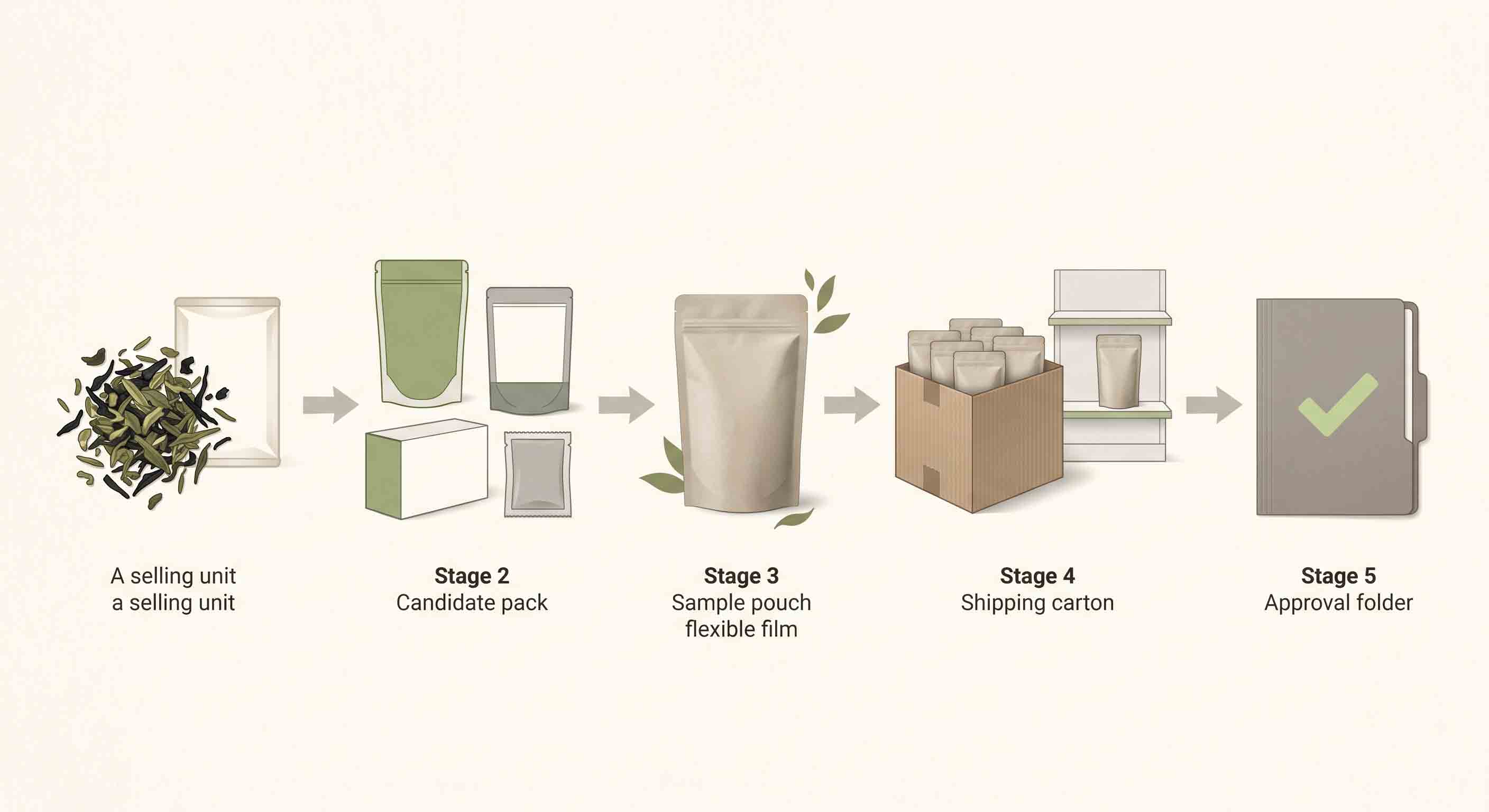
Start with the product the customer buys. Define the tea format, servings, consumer use, retail environment, outer pack, and shipping method. Then select candidate formats and order samples. Do not begin with a random pouch type or use a competitor’s pack as a substitute for product testing.
If you are assessing formats for a tea project, custom tea packaging options can be reviewed based on the tea category, target fill, desired pouch or bag type, artwork, and destination. Use the enquiry stage to identify what requires a sample or supplier document rather than assuming a standard configuration.
Compare formats by the handling moment that matters most
The best format often becomes clearer when the team identifies the moment at which the pack must work. That moment may be a shopper recognizing a variant, a hotel guest taking one tea bag, a café worker opening a bulk pack, or a household consumer storing loose leaf tea after opening. A format selected only for its empty appearance can fail at one of these moments.
These are not pre-approved performance tests. They are prompts for a physical sample review. A pouch, envelope, carton, or combined system can be appropriate if it fits the product journey and the evidence required for the final market.
Make a format decision matrix before designing artwork
When several formats remain possible, compare them against the same list of project requirements. This prevents a team from changing the decision criteria every time a more attractive pouch or carton is shown.
Keep the entries factual. “Looks more premium” is a preference; “has room for the approved information without crossing the side gusset” is an observation that can be checked. The final decision should identify both: the brand preference and the product requirement it must not violate.
Use a pilot pack to test the complete system
Once the team has a preferred format, test the entire selling unit before production approval. For loose leaf tea, that means the real tea in the selected pouch, with the intended closure, dimensions, and artwork zones. For individual tea bags, it means the inner bag, optional envelope, count, and carton assembled together. For gift sets, it means the customer-facing outer pack and all inner units.
During a pilot review, check:
- fill volume and the relationship between the product and the pack shape;
- seal and closure areas;
- readability of the product name, format, count, brewing information, and other approved copy;
- orientation of variants and units in the retail pack;
- fit within the planned display, shipper, mailer, or gift box;
- consumer opening and storage behavior;
- documentation or claim questions that remain open.
The pilot is a decision tool. It cannot establish a universal shelf-life, compliance, or environmental result. It shows whether the chosen architecture is ready for the remaining project-specific validation.
Keep material decisions visible as formats change
A brand may move from a flat pouch to a box-bottom pouch, add an individual envelope, or place a pouch into a carton. These format changes can introduce new components and alter what a consumer assumes from a material or environmental statement. Update the component map and evidence review whenever the packaging architecture changes.
For example, a carton claim should not automatically extend to an inner flexible pouch. An envelope instruction should not be written as though it applies to the filter bag. A visual “paper” texture should not be used as evidence of a material, recycling, or composting outcome. The final consumer wording has to name the component it covers and reflect the current documentation for the target market.
This is why the format choice should be locked before the team approves final claims and artwork—not because a format is permanent, but because a changed format may require a fresh review.
A simple format-approval sequence
- Define the tea and selling unit.
- Map every packaging layer and its customer-facing job.
- Compare candidate formats against the same product, artwork, operation, and market questions.
- Obtain a physical sample using the actual tea or actual inner unit.
- Review it in the intended retail, shipping, and consumer-use route.
- Confirm the required documents and approved claims for the final component map.
- Approve the structure, current dieline, and visible content together.
- Record the sample and decision so later variations can be reviewed deliberately.
This sequence makes format selection repeatable across a tea range. It allows a brand to use different formats for different product jobs while keeping the decision logic consistent.
Frequently asked questions
What are the main types of tea packaging?
They include inner filter bags, three-dimensional sachets, individual envelopes, loose-leaf pouches, flat pouches, box-bottom pouches, bulk formats, cartons, and combined systems. The product may use more than one layer.
Which packaging type is best for loose leaf tea?
Choose based on tea volume, target weight, consumer use, retail display, closure needs, artwork, and the target market. A physical sample with the real tea is more reliable than a generic format recommendation.
Do all tea bags need an outer envelope?
No. An outer envelope is a project-specific choice that may suit travel, hospitality, gifting, or individually handled portions. Review it against the product journey and material documentation.
Can the same pack be used for tea bags and loose leaf tea?
Sometimes, but they are different products with different pack counts, volumes, and consumer uses. Define each selling unit before assuming a shared pack works.
What should I test before choosing tea packaging?
Test the real tea in the candidate format. Review fill, sealing area, opening and closing, brewing or serving use, pack count, artwork, storage, handling, and any documentation required for the market.
Sources
- FDA food-contact overview: https://www.fda.gov/food/food-ingredients-packaging/food-packaging-other-substances-come-contact-food-information-consumers
- Related Project, 125 g tea pouch: https://www.mylarbag.net/products/food-packaging/custom-matte-flat-bottom-tea-pouch-with-clear-window-matoppvmpetpe-for-125g-loose-leaf-green-tea-herbal-blends