The Mystery Solved: What is the Valve/Circle on Coffee Bags?
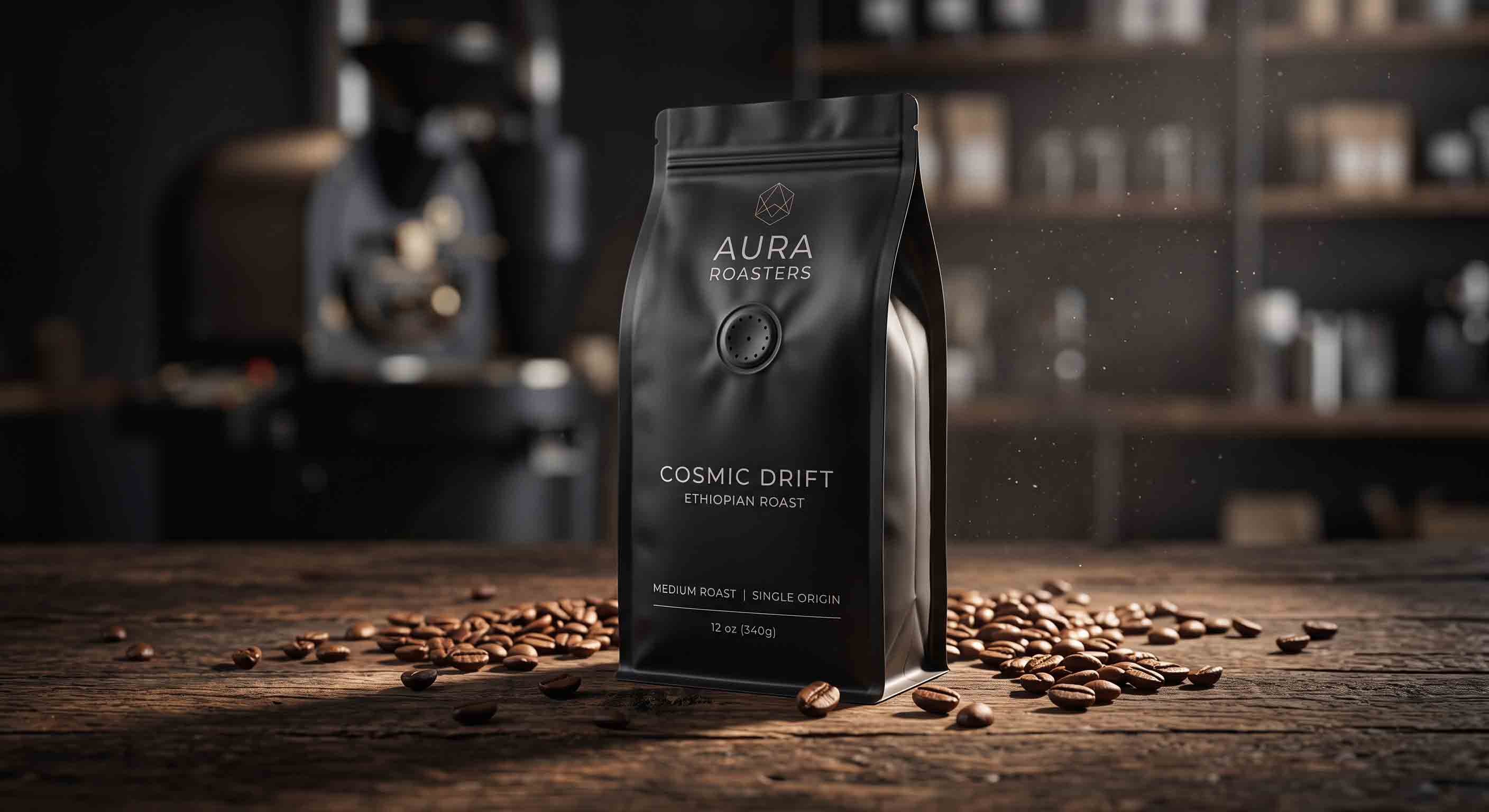
Key Takeaways (TL;DR): What is the plastic circle on a coffee bag? It is a one-way degassing valve. This critical packaging component allows freshly roasted coffee beans to release trapped carbon dioxide (CO2) safely. It prevents the bag from rupturing while acting as an impenetrable barrier against oxygen, locking in peak flavor.
What is the Plastic Circle or Valve on Coffee Bags?
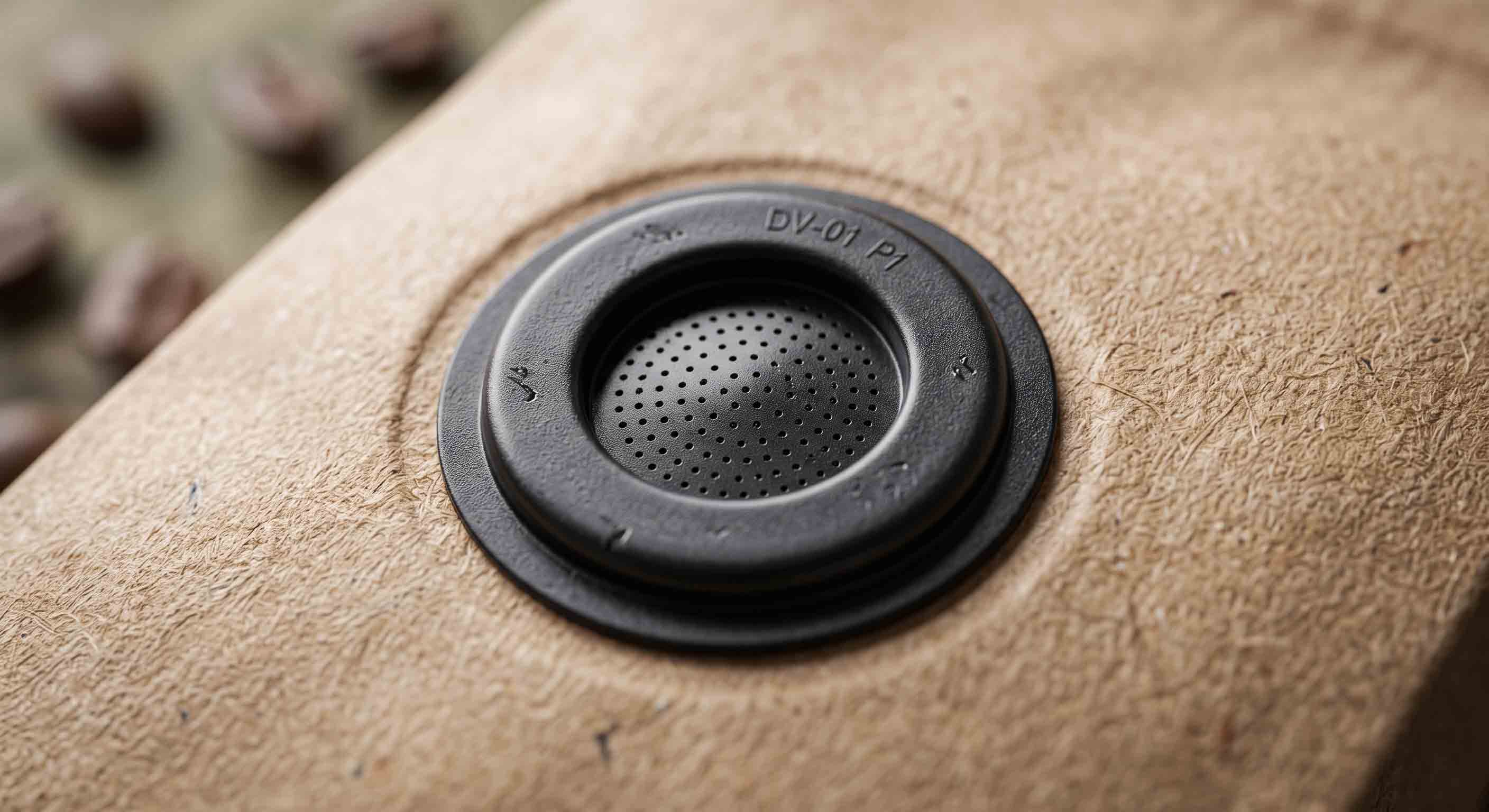
Grab any decent bag of roasted coffee, and you'll spot it: a little plastic circle. I hear the same question from startup roasters every week: what is the plastic thing in a coffee bag?
Definition: A one-way degassing valve is a precision packaging component designed to let accumulated carbon dioxide (CO2) escape from a sealed coffee bag while preventing outside air from entering the package.
As a flexible packaging engineer, I can tell you this component isn't just for show. It acts as a highly sensitive one-way door. If you roast specialty coffee, using custom coffee bags with valves isn't an option; it's a requirement to keep the beans fresh and prevent the bags from blowing up on the retail shelf.
The "Smelling Hole" Myth: Should You Squeeze the Bag?
Search online, and you'll find people calling it a "smelling hole" meant for squeezing the bag in the grocery store aisle to check the aroma.
Don't do that.
Squeezing forces the protective layer of CO2 out prematurely. Once the CO2 is gone, the staling process speeds up. You also risk physically crushing the delicate beans. The valve is a technical exhaust system—not a scratch-and-sniff marketing tool.
The Science: How Do Coffee Bag Valves Work?
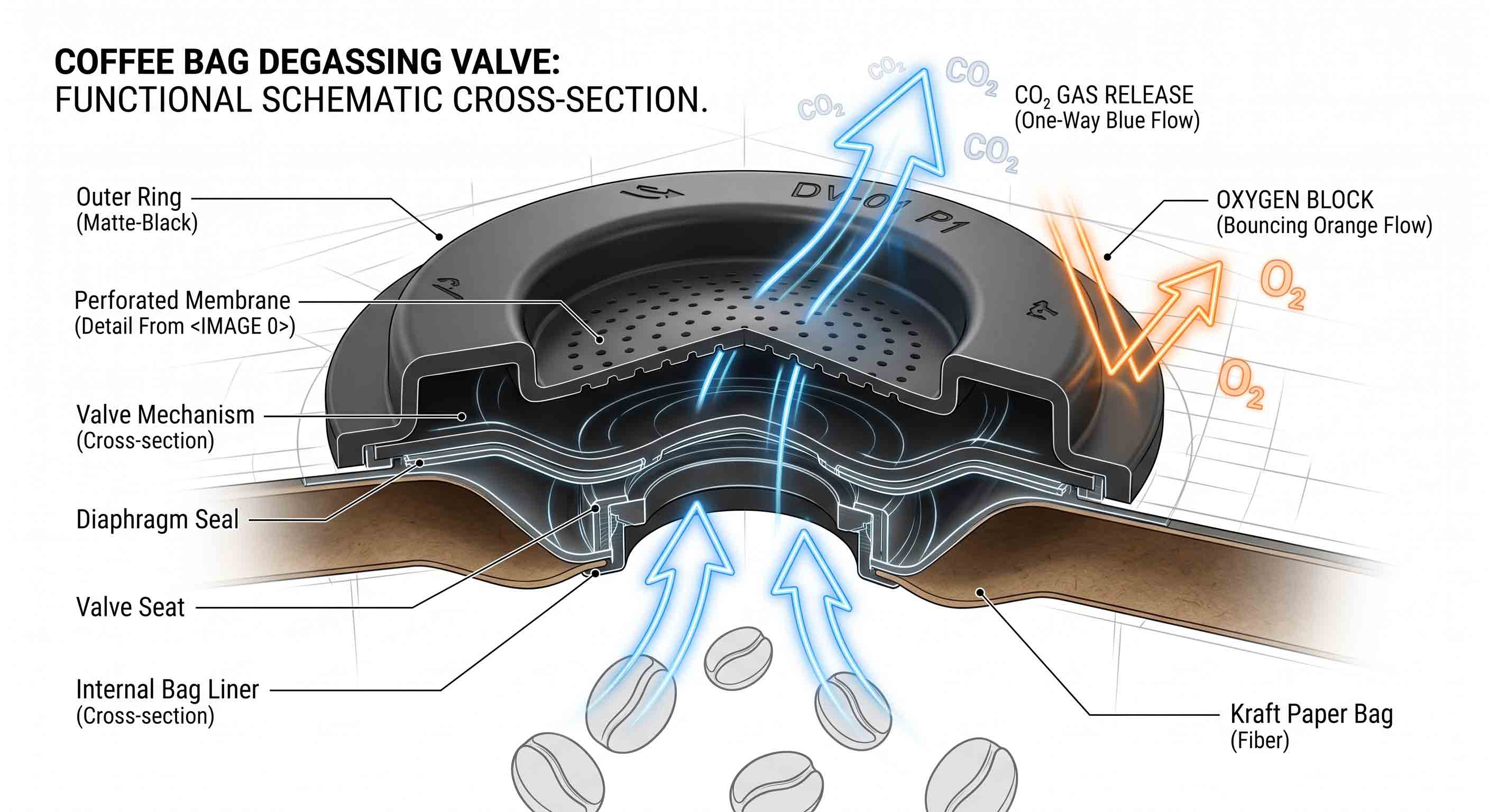
Here is what actually happens inside the bag. To grasp how do coffee bag valves work, we have to look at the chemistry of roasting and the packaging's OTR (Oxygen Transmission Rate) and MVTR (Moisture Vapor Transmission Rate).
The Science of CO2 Release (Degassing)
Roasting coffee triggers the Maillard reaction. High heat breaks down carbohydrates, trapping massive amounts of carbon dioxide inside the bean's cellular structure.
Let's look at the numbers. According to the Journal of Agricultural and Food Chemistry, a single kilogram of freshly dark-roasted coffee beans can generate carbon dioxide, where the release varies by roast profile, coffee quantity, time since roasting, and package headspace. That gas needs a way out.
Blocking Oxygen: Protecting Coffee Bean Aroma
The beans need to vent CO2, but oxygen is the absolute enemy. According to the Specialty Coffee Association (SCA), coffee exposed to oxygen loses up to 50% of its original aroma within just two weeks.
How Does a Coffee Degassing Valve Work? (Step-by-Step)
Based on Swiss engineering standards (like those from WIPF), here is the exact 4-step mechanism of high-precision valves:
- Pressure Buildup: Freshly roasted coffee releases liters of CO2, increasing the internal pressure.
- Valve Opening: Valve opening behavior varies by valve design and package conditions.
- Safe Venting: The excess gas vents safely through the small hole, preventing the balloon effect.
- Hermetic Seal: Once the pressure drops back to roughly 0.5 millibars, the membrane snaps shut instantly, sealing out ambient oxygen.
The Roast Profile Factor: Light vs. Dark Roasts
Different roasts don't off-gas at the same speed.
Quick Reference: Degassing Speed by Roast Level
Here is a breakdown of how roasting temperature affects CO2 emission and valve necessity:
| Roast Level | Bean Structure | CO2 Emission Rate | Valve Necessity |
|---|---|---|---|
| Light Roast | Dense, intact cell walls | Slow (Can take weeks) | Yes (Preserves nuances and prevents oxidation) |
| Medium Roast | Expanded cell walls | Moderate (Peaks in 1-3 days) | Yes (Crucial for flavor locking) |
| Dark Roast | Fragile, porous structure | Extremely Fast (Hours to days) | Absolutely Critical (High risk of bursting) |
⚙️ The Science of Light Roasts and Valves
It is a common misconception that if a bag of light roast coffee does not puff up, the valve is defective. As seen in the table above, light roast beans retain an intact cellular structure, releasing significantly less gas volume compared to a dark roast. The valves are likely working perfectly; there simply isn't enough rapid gas buildup to inflate the bag.
What Happens if a Coffee Bag Doesn't Have a Valve?
If you seal freshly roasted coffee in an airtight bag without a valve, expect one of two outcomes:
- The Balloon Effect: Trapping up to 10 liters of CO2 per kilo will inflate the bag like a balloon until it pops at the seams.
- Staling and Flavor Loss: To avoid bursting, some brands let the coffee "rest" in open silos for days before packing to let the CO2 dissipate. The trade-off? The coffee gets heavily exposed to oxygen and loses its peak aromatics before hitting the bag.
🏭 Factory Floor Case Study: The High-Altitude "Balloon" Disaster
Skipping the valve to save a few cents can lead to disastrous consequences. If freshly roasted beans are packed into unvalved bags and shipped via air, the rapid CO2 degassing combined with the low pressure in cargo holds significantly increases the risk of the 'Balloon Effect,' which can compromise seal integrity. Upgrading to custom Flat-Bottom Bags equipped with premium degassing valves prevents these high-altitude blowouts by allowing the rapid off-gassing to vent safely.
Advanced Engineering: Not All Valves Are Created Equal
A valve looks like a simple piece of plastic. But sourcing cheap ones from random brokers is a quick way to ruin a batch.
For roasters dealing with oily, dark-roasted beans, a standard valve isn't enough. You need an Oil-Resistant Filter.
🏭 Factory Floor Case Study: The Ruined Matte White Bag
Brands using a stunning minimalist matte-white aesthetic can face PR disasters if an ugly, brown oil ring seeps through the paper around the valve. This often happens when sourcing cheap stock bags from a middleman. The cheap valves lacked an internal mesh filter (a 50-micron density required for dark roasts). The heavy coffee oils were carried by the escaping CO2 directly onto the membrane, leaking onto the white exterior.
The Solution: Utilizing engineered valves featuring a specialized multi-layer oil filter and subjecting bags to rigorous underwater vacuum leak testing ensures matte white bags remain pristine.

Do Ground Coffee Bags Need a Valve? (Whole Bean vs. Pre-Ground)
Do I still need a valve for pre-ground coffee? It depends on your packing timeline.
Grinding shatters the bean's cellular structure. Studies show that grinding forces the coffee to release up to 80% of its stored CO2 within the first 10 to 15 minutes. If you grind the coffee and leave it exposed to air for an hour before packing, a valve is largely unnecessary because the degassing is done (though you've sacrificed freshness).
However, if you grind and pack immediately (flushed with nitrogen) to lock in peak flavor, a valve is still necessary to handle residual off-gassing.
Sustainability: Are Coffee Bag Valves Recyclable?

As the industry moves towards sustainable packaging, traditional plastic valves are a hurdle. They use mixed hard plastics (PP/PE) and rubber, disrupting the recycling stream of otherwise mono-material bags.
At Mylarbag, we fix this by offering Eco-Valves (fully recyclable PE valves) that weld seamlessly into our 100% Recyclable PE4 coffee bags. We also offer compostable PLA valves for brands committed to home-compostable setups. This ensures your packaging protects both the coffee and the planet.
🚀 Partner with a Trusted Coffee Packaging Manufacturer
Packaging shouldn't be the bottleneck for your coffee brand. A failed valve or weak seal ruins good beans and burns cash. As a direct factory, we build reliable bags so you can focus on roasting. Why do top roasters choose us?
- Leak Resistance: We ensure valve selection, film structure, and sealing settings are perfectly matched to your specific roast to minimize any risk of leakage.
- Low MOQ Custom Printing: Whether you need 5,000 bags via Digital Printing or 50,000 via Rotogravure, we deliver vibrant, accurate colors.
- Hassle-Free Global Shipping: We handle the logistics. With our DDP (Delivered Duty Paid) service, bags arrive at your roastery's door—no hidden customs fees or port delays.
Don't let a cheap valve ruin your roast. 👉 Request a Free Sample Kit Today to test our valves yourself, or explore our full line of custom coffee bags for wholesale to get an instant quote!
Frequently Asked Questions (FAQ)
Why do bags of coffee have holes in them? The "holes" are actually vents for the one-way degassing valve. They allow carbon dioxide emitted by freshly roasted coffee beans to escape safely without letting oxygen in.
What is the plastic thing in a coffee bag? That plastic component is the degassing valve. It features a highly sensitive membrane that lets CO2 gas out but prevents staling ambient oxygen from entering.
Do coffee bean bags need a valve if they are light roast? Yes. While light roasts release less CO2 and do it much slower than dark roasts, they still undergo the degassing process. A valve preserves the structural integrity of the bag and the nuanced flavors of the light roast.
Why do coffee bags have vents instead of just a hole? A simple open hole would let CO2 out, but it would also let oxygen in, quickly ruining the coffee. A specialized vent or one-way valve only allows gas to exit, keeping the interior airtight and oxygen-free.