How Long Do Coffee Beans Last? (Unopened vs. Opened Guide)
NOTE: TL;DR / Quick Answer Wondering how long your coffee beans will last? It depends on the bag.
- Unopened Coffee Beans: 6 to 9 months (if stored in a Mylar bag with a one-way valve).
- Opened Coffee Beans: 1 to 3 weeks at peak flavor.
- Ground Coffee: 3 to 5 days before the aroma fades. To make beans last longer, you have to stop oxygen from getting in. That means checking your bag's Oxygen Transmission Rate (OTR).
Shelf Life vs. Peak Flavor: What’s the Difference?
You see coffee bags in the grocery store with "Best By" dates set a year in the future. As someone who builds foil packaging for a living, I can tell you this: safe to drink and good to drink are two different things.
- Shelf Life (Safe to Consume): Coffee isn't milk. It won't spoil. Roasting dries the beans out, so they don't grow mold in a dry pantry. Yes, you can brew two-year-old beans. But they will taste like cardboard.
- Peak Flavor: This is the short window where the coffee actually tastes right. The acidity pops, and you can taste the specific origin notes. Once this window closes, the flavor goes flat.
If you roast coffee, your customers judge you on peak flavor. You need good wholesale coffee bags to protect that flavor from the second it leaves your shop.
Does Coffee Expire or Go Bad?
People ask if coffee expires. It doesn't rot like meat. The roasting process dries the beans out, so bacteria can't survive. Old coffee won't make you sick. But it will taste terrible. The oils on the beans oxidize over time. That bitter, flat taste you get from old coffee is just oxidation. All the origin notes are gone.
The Science of Staling: What the Data Says
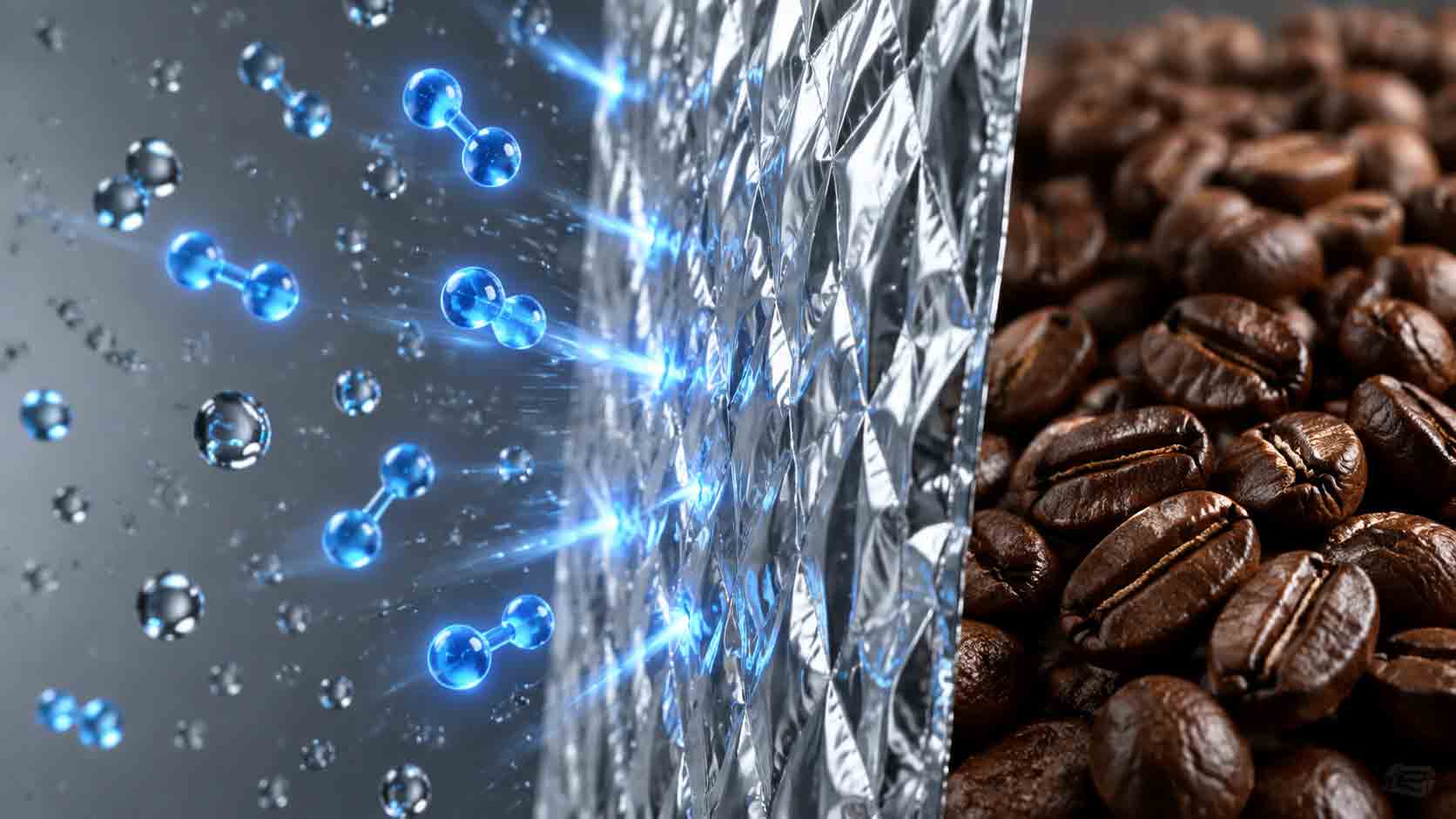
Research from the Journal of Agricultural and Food Chemistry breaks down the chemistry of stale coffee. It happens because of lipid oxidation and aroma loss.
Here are two facts you need to know:
- The 1% Oxygen Rule: If even 1% of the air in your bag is oxygen, your coffee loses aroma 20% faster over three weeks. This is why nitrogen flushing matters.
- Heat Ruins Coffee: Chemistry follows the Arrhenius Equation. Basically, every time the room temperature goes up by 10°C (18°F), your coffee goes stale twice as fast.
This is why the Specialty Coffee Association (SCA) tells roasters to use high-barrier packaging. If oxygen gets in, the beans go stale. You need the right materials.
Key Coffee Packaging Terms
Here are three packaging terms you should know:
- OTR (Oxygen Transmission Rate): The amount of oxygen that leaks through a material over time. You want this number to be as low as possible.
- MVTR (Moisture Vapor Transmission Rate): The amount of humidity that gets through a bag. A low MVTR stops mold.
- One-Way Degassing Valve: A valve that lets CO2 out of the bag, but keeps oxygen from getting in.
How Long Does a Sealed (Unopened) Bag of Coffee Last?
Answer: 6 to 9 Months (If packaged correctly).
Fresh beans release gas immediately. If you don't open the bag, shelf life depends entirely on the bag's material.
Put fresh beans in a kraft paper bag with a cheap plastic liner, and oxygen gets in right away. The flavor fades in weeks. If you use a 3-ply structure with Aluminum Foil (AL) or Metallized PET (VMPET), the OTR drops to zero. The beans stay fresh.
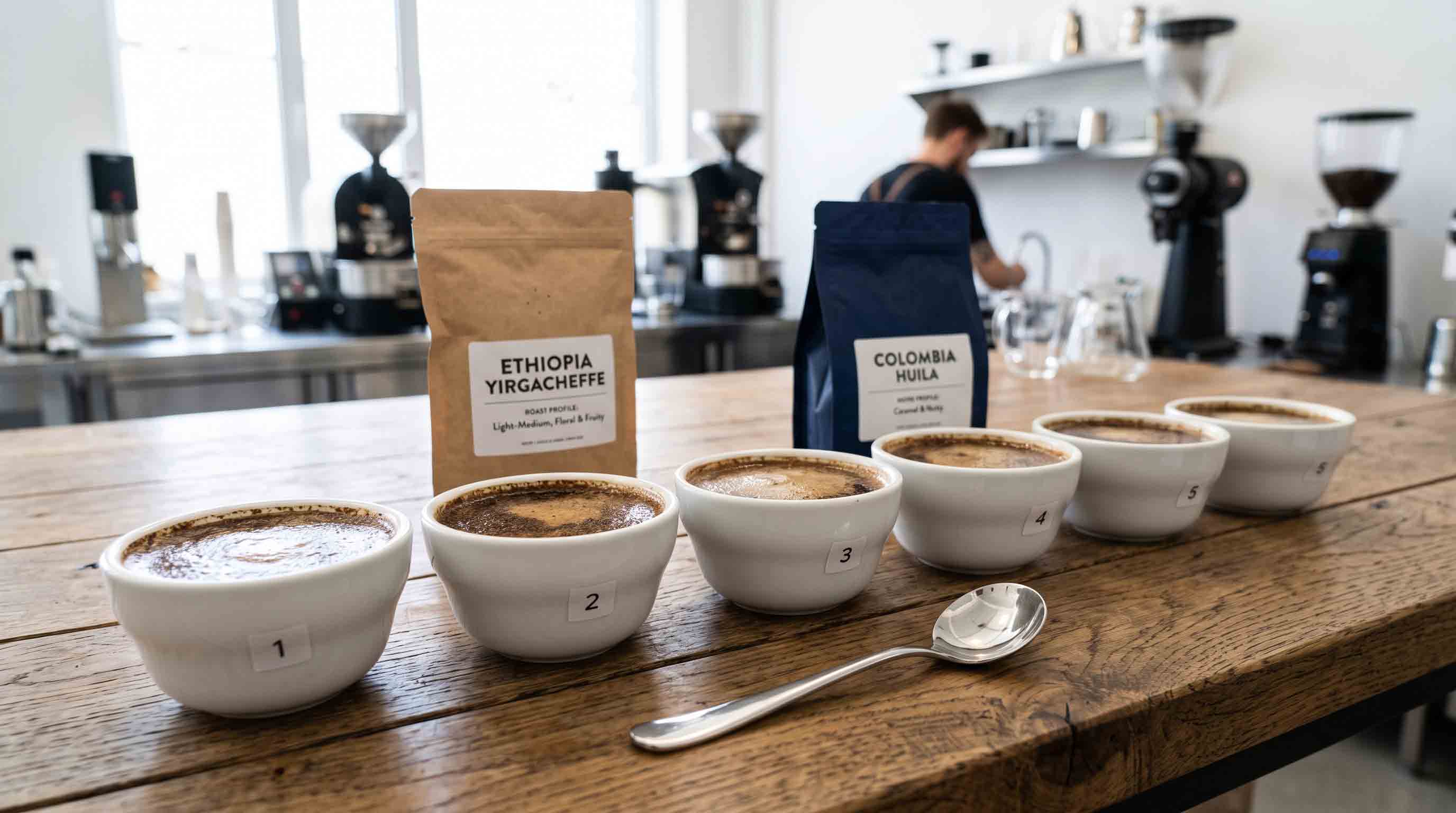
[!TIP] Real-World Experiment: The 6-Month Blind Cupping Test
Last year, a client in the UK ran a blind cupping test. They put half a batch of beans in standard kraft paper bags and the other half in our 3-ply Mylar Aluminum (AL) bags. The result after 6 months? After six months, the beans in the paper bags tasted like wood. The acidity was gone. The beans in the AL bag still had bright, fruity notes. They cupped like a fresh roast. A true barrier is the only way to keep flavor for months.
[!IMPORTANT] The Nitrogen Flush Mistake We worked with a roaster who bought a pricey nitrogen-flushing machine but still got complaints about stale coffee. We checked their packaging. They were using a single-layer plastic film with an OTR over 50. All the nitrogen leaked out in a week. We moved them to a metalized polyester bag made for custom coffee bags. The nitrogen stayed in. Shelf life went from two weeks to six months. Your equipment doesn't matter if your bag leaks.
The 3 Hidden Enemies of Coffee Beans Shelf Life
Oxygen and moisture cause the most damage, but they aren't the only problems. Here is what else ruins coffee beans:
1. Light and Photo-Oxidation
Many people like clear bags to show off the roast. The problem is UV light. Light exposure breaks down the coffee oils and makes them rancid. If your bags sit on a store shelf under lights, you need an opaque layer like VMPET or pure foil to block the UV rays. If you want a green option, look at our eco-friendly coffee packaging.
2. The Refrigerator & Freezer Myth
People always argue about freezing coffee. Roasted beans absorb moisture and smells like a sponge. If you put them in the fridge in a paper bag or a Ziploc, they will absorb the smell of the food in your fridge. Also, when you take them out, condensation forms inside the bag and ruins the flavor. The Verdict: You can freeze coffee for six months, but only if it is in a high-barrier pouch. You also have to let it warm up to room temperature before you open it.
3. Missing Degassing Valves
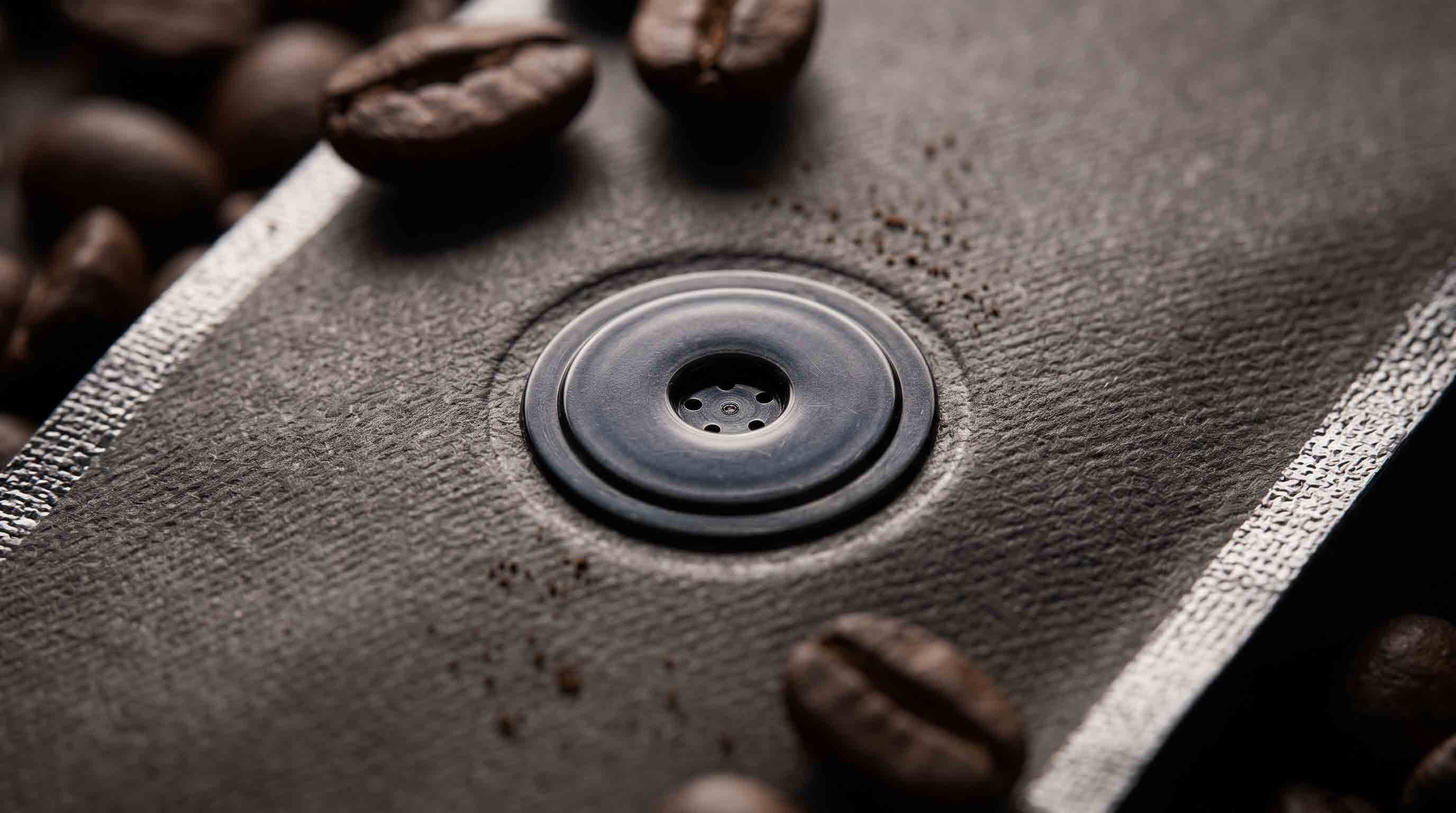
Fresh roasted coffee releases carbon dioxide. If you put fresh beans in a sealed bag without a valve, the bag will expand and pop. Some companies just poke a hole in the bag. This lets the gas out, but it lets oxygen in. A real one-way degassing valve lets the CO2 out without letting any air back in.
The Staling Timeline: A Day-by-Day Breakdown
Here is what happens inside the bag as time passes:
- Days 1 - 3 (The Degassing Peak): The beans release a lot of CO2. They are too fresh to brew well because the gas gets in the way of the water.
- Days 4 - 14 (The Golden Window): The gas release slows down. The flavor peaks here. The acidity and origin notes are clear.
- Weeks 3 - 4 (The Decline Begins): If you open the bag, oxidation starts. The aroma fades and espresso crema gets thin.
- Months 2 - 3 (Stale & Flat): The oils oxidize. The coffee loses its unique notes and tastes flat.
- Month 6+ (Rancidity): The surface oils go rancid. It will taste bitter or like cardboard.
How Long Does an Opened Bag of Coffee Beans Last?
Answer: 1 to 3 Weeks.
Once you open the bag, oxygen gets in and the oils start going bad. Within three weeks, even the best coffee will taste flat.
You have to reseal the bag to slow this process. This is why we use heavy-duty pocket zippers on our pouches. Your buyers shouldn't have to put their beans in a Ziploc bag.
The Physical Variables: Grind Size and Roast Level
The condition of the bean itself also matters.
Whole Bean vs. Ground Coffee
| Coffee Type | Unopened Lifespan (High-Barrier Bag) | Opened Lifespan (Room Temp) | Why Does it Go Stale? |
|---|---|---|---|
| Whole Bean | 6 - 9 Months | 2 - 3 Weeks | Slower oxidation due to smaller surface area. |
| Ground Coffee | 3 - 5 Months | 3 - 5 Days | Grinding increases the surface area by up to 10,000%, speeding up CO2 loss and oxidation. |
Note: Grinding the coffee exposes more of it to the air. If you sell pre-ground coffee, using printed coffee packaging with a high barrier is a must.
Light Roast vs. Dark Roast
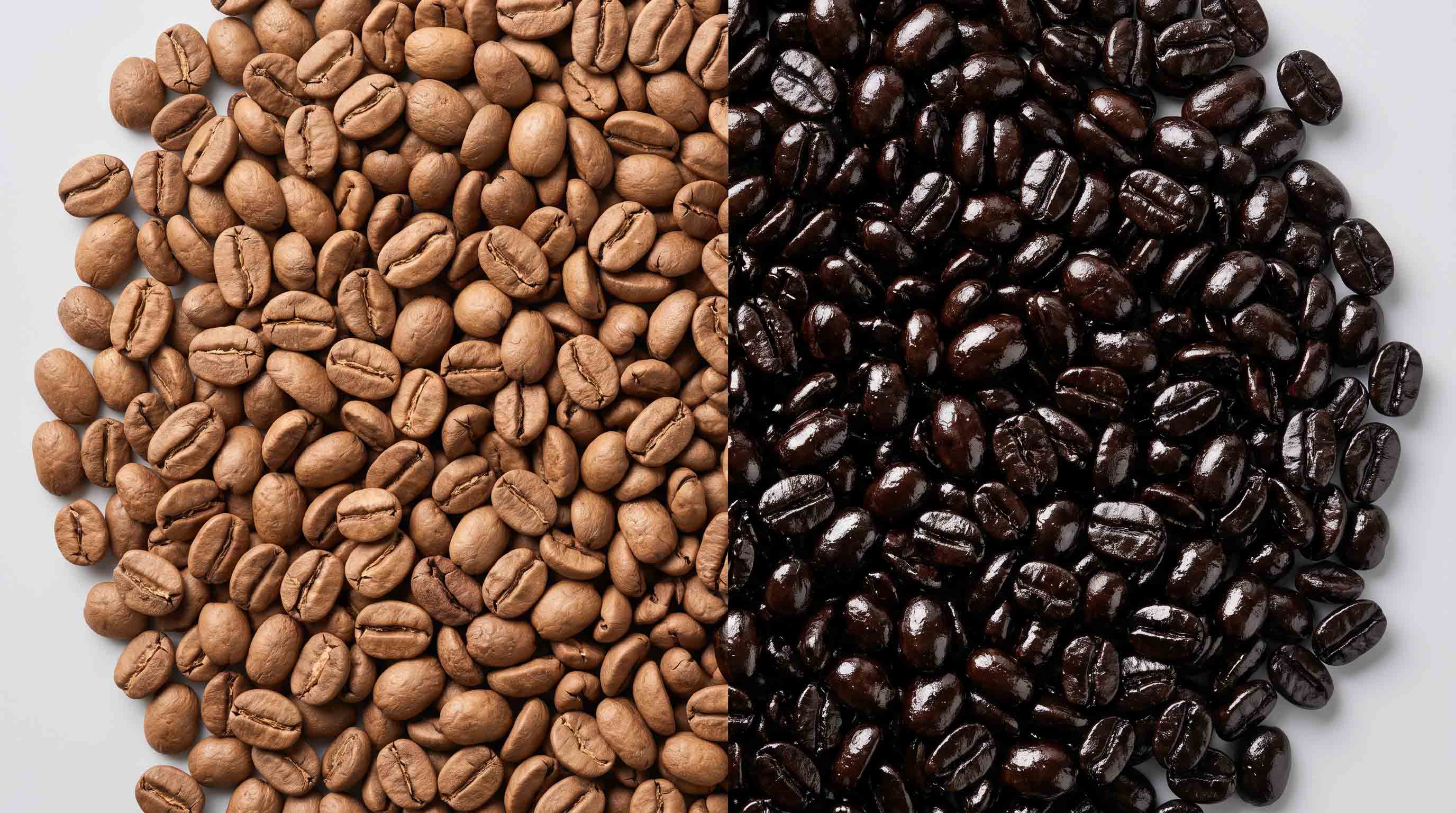
Dark roasts expand the bean structure and push the oils to the surface. Because the oils are exposed, dark roasts go stale 20% to 30% faster than light roasts. Light roasts are denser. If you roast dark, you need good bags and nitrogen flushing.
The Real-World Impact: When Packaging Fails
Bad packaging costs money.
[!WARNING] Client Case Study: The Equator Shipping Disaster Last year, a farm in South America shipped green beans across the equator in woven sacks. Temperature swings caused condensation in the container. The beans soaked up the water, and half the shipment arrived covered in mold. After that, they switched to our EVOH liner bags to block the moisture. They haven't lost any beans to mold since.
How to Store Coffee Beans to Maximize Shelf Life (3-Step Guide)
How to keep your beans fresh for 9 months:
- Keep them in the original bag: Don't put them in a jar or a Ziploc. The original bag has the foil barrier and the valve.
- Squeeze the air out: Before you zip it, press the bag to push the air out through the valve.
- Store in a dark, cool place: Keep the bag in a pantry away from the oven and out of the sun. Don't use the fridge.
The Bottom Line for Roasters
You spend time finding good green beans and dialing in the roast. Don't ruin it with a cheap bag.
Whether you need standard rotogravure printing for large orders or digital printing for small runs, we have options to protect your coffee.
Frequently Asked Questions (FAQ)
Can old coffee beans make you sick? No. Old beans will not make you sick. Coffee is dry, so bacteria can't grow on it. It just tastes bad. However, if the beans get wet and grow mold, you should throw them away.
How can you tell if coffee beans have gone bad? Smell them. Fresh coffee smells strong and complex. Stale coffee smells like cardboard. Also look at the beans. If a dark roast looks dry and dull instead of shiny, it is stale. If the coffee doesn't bubble when you pour hot water on it, it's stale.
Is it better to store coffee beans in glass jars or the original bag? Keep them in the original bag if it has a zipper and a valve. Glass jars let light in, and they trap fresh air inside every time you put the lid back on. If you have to use a jar, get one that blocks light and pumps the air out.