How Many Cups of Coffee in a 12 oz Bag? (Ultimate Yield Guide)
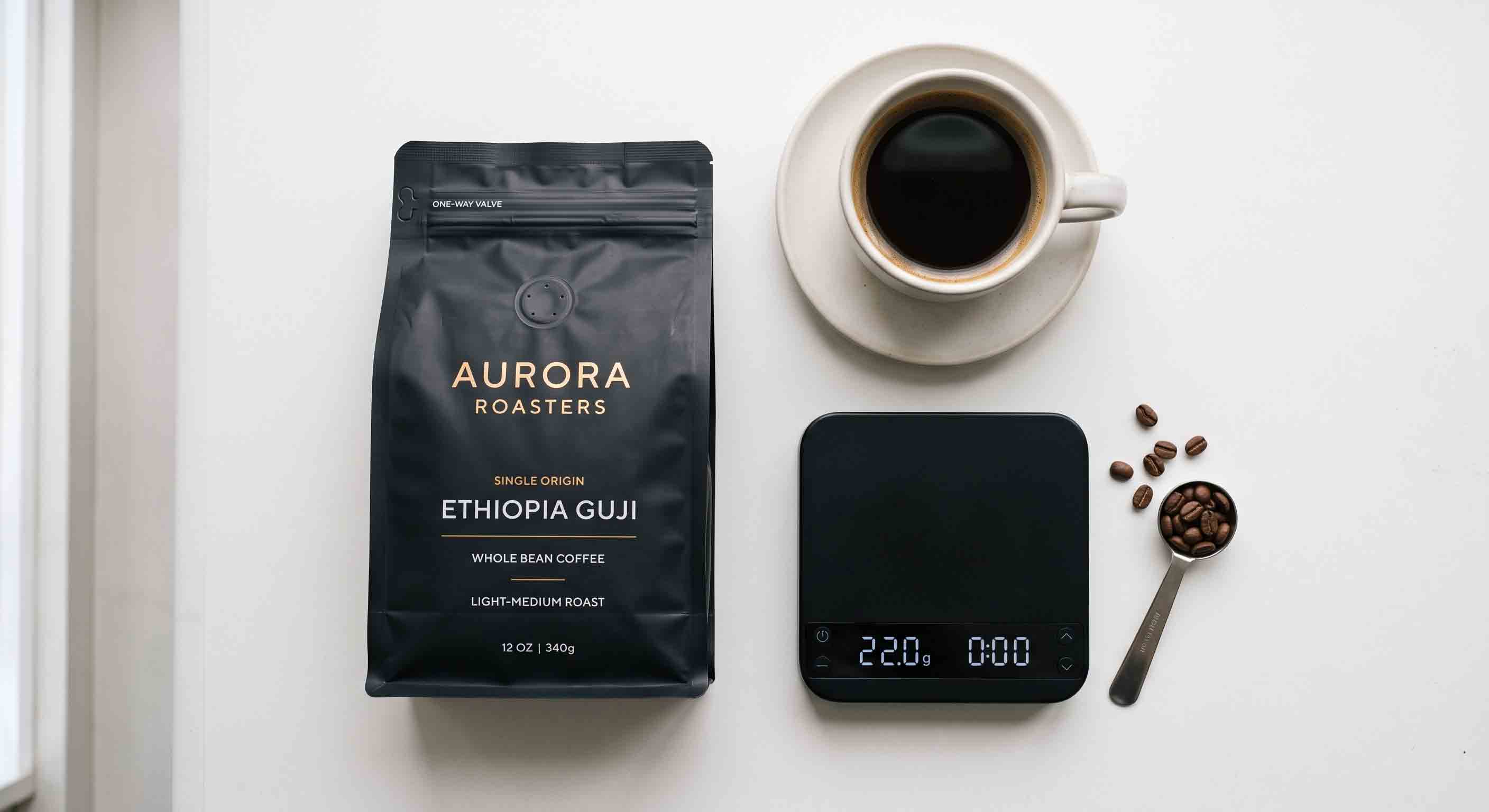
Key Takeaways (TL;DR): A standard 12 oz bag of coffee yields approximately 22 to 32 cups of coffee, depending heavily on your cup size and brewing strength. A 16 oz (1 lb) bag yields approximately 30–42 cups, while a 5 lb bag yields approximately 150–210 cups, using the same 8 oz and 6 oz cup assumptions as the table below. However, for coffee roasters, the physical packaging size required to hold these 12 ounces varies dramatically based on roast density, cellular expansion, and high-barrier material thickness.
2. The Ultimate Coffee Yield Chart (Cups & Grams)
Here is a practical yield estimate for common coffee bag sizes. These estimates assume:
- 8 oz cup: Uses approximately 15.5 grams of coffee.
- 6 oz cup: Uses approximately 10.6 grams of coffee.
- Brewing Method: Standard automatic drip coffee maker (1:15 to 1:18 coffee-to-water ratio).
These yields are estimates based on a coffee-to-water ratio around 1:15 to 1:18. For this chart, the 8 oz column assumes roughly 15.5 grams of coffee per cup, while the 6 oz column assumes roughly 10.6 grams per cup.
| Bag Size (Weight) | Weight in Grams | Standard Yield (8 oz cups) | Standard Yield (6 oz cups) | How Many Pots? (12-cup pots) |
|---|---|---|---|---|
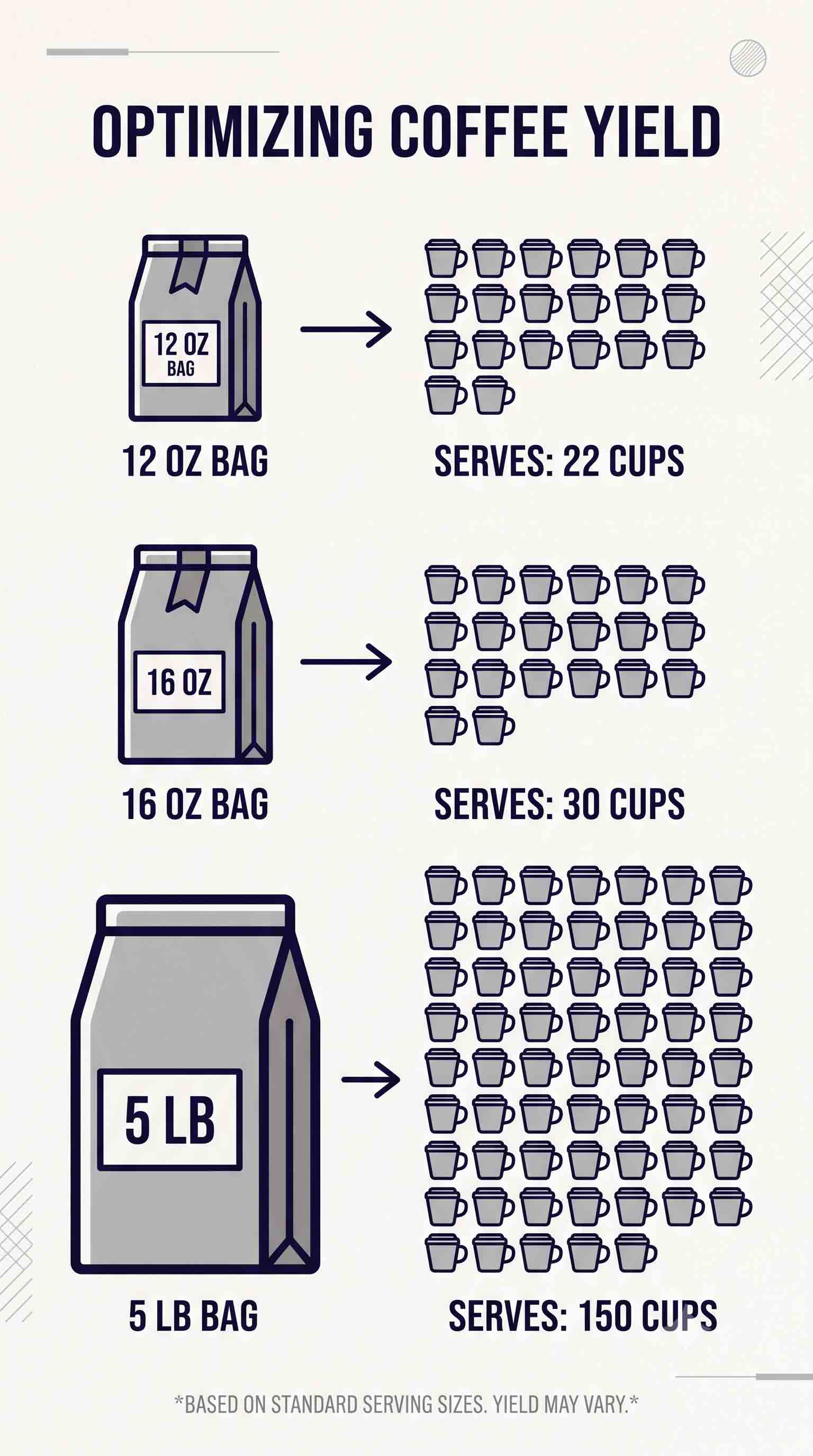
| 12 oz bag | 340 grams | ~22 cups | ~32 cups | ~2.5 pots |
| 16 oz bag (1 pound) | 454 grams | ~30 cups | ~42 cups | ~3.5 pots |
| 18 oz bag | 510 grams | ~34 cups | ~48 cups | ~4 pots |
| 5 lb bag (Commercial) | 2,268 grams | ~150 cups | ~210 cups | ~17.5 pots |
(Visual learner? Save our handy cheat sheet below!)
Whether you are a daily coffee drinker trying to budget your morning brew, or an independent coffee roaster engineering the perfect shelf presence for your brand with premium coffee packaging, understanding coffee yield is a critical science.
Here is exactly how many cups of coffee you can expect from a 12 oz bag, complete with volumetric charts, extraction math, cost-per-cup breakdowns, and the packaging engineering secrets behind how roast density affects your bags.
1. The Basics: Weight vs. Volume in Coffee Packaging
Before running the exact math, there is one golden rule of coffee packaging you need to remember: 12 ounces is a measurement of weight (mass), not volume (space).
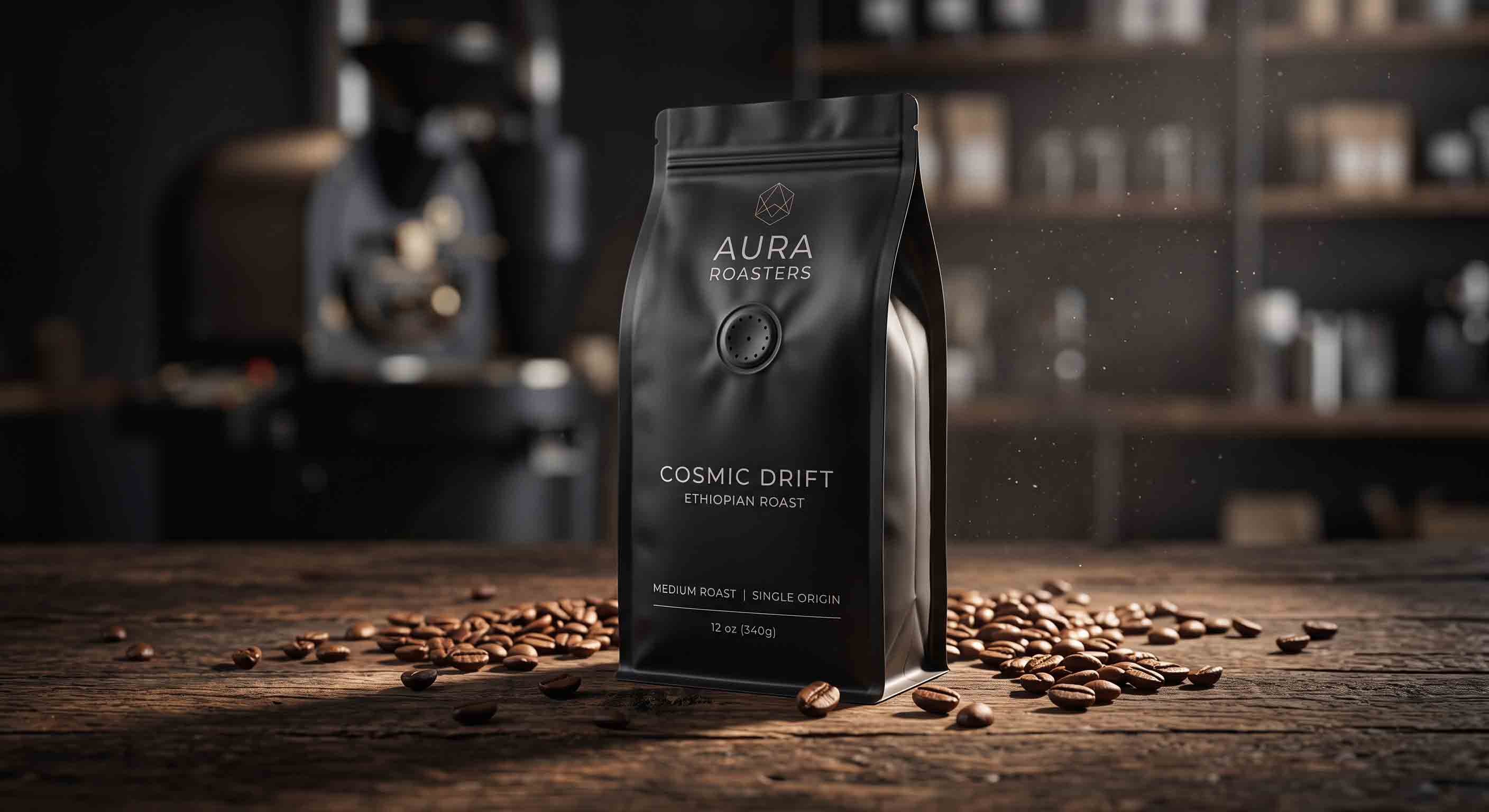
This is the number one source of confusion when consumers and new coffee roasters ask questions like "how big is a 12 oz bag of coffee?". For a coffee drinker, 12 ounces means you are getting roughly 340 grams of coffee mass. However, for a packaging engineer or a coffee roaster who is purchasing bags, the physical volume that those 340 grams occupy can fluctuate wildly based on the roast profile and the state of the beans.
The Physics of Roast Density (The French Roast Trap)
If you have ever wondered why a 12 oz bag of coffee might look "half empty" or "overflowing," it all comes down to the thermodynamics of coffee roasting.
During the roasting process, raw green coffee beans undergo the Maillard reaction and caramelization. As detailed in foundational roasting literature such as Scott Rao's The Coffee Roaster's Companion, as beans absorb heat, the moisture inside the bean turns to steam, building intense internal pressure until the cellular structure of the bean physically fractures (known as the "First Crack" and "Second Crack").
- Moisture Loss (Weight Reduction): A roasted bean loses between 12% to 20% of its original water weight.
- Cellular Expansion (Volume Increase): Simultaneously, the physical size of the bean expands by 50% to 100%.
A dark roast (like a French Roast or Italian Roast) is pushed well into the Second Crack. It loses maximum water weight and achieves maximum cellular expansion. Therefore, a dark roast bean is significantly less dense and takes up about 15% to 20% more physical space than the exact same weight of light roast beans.
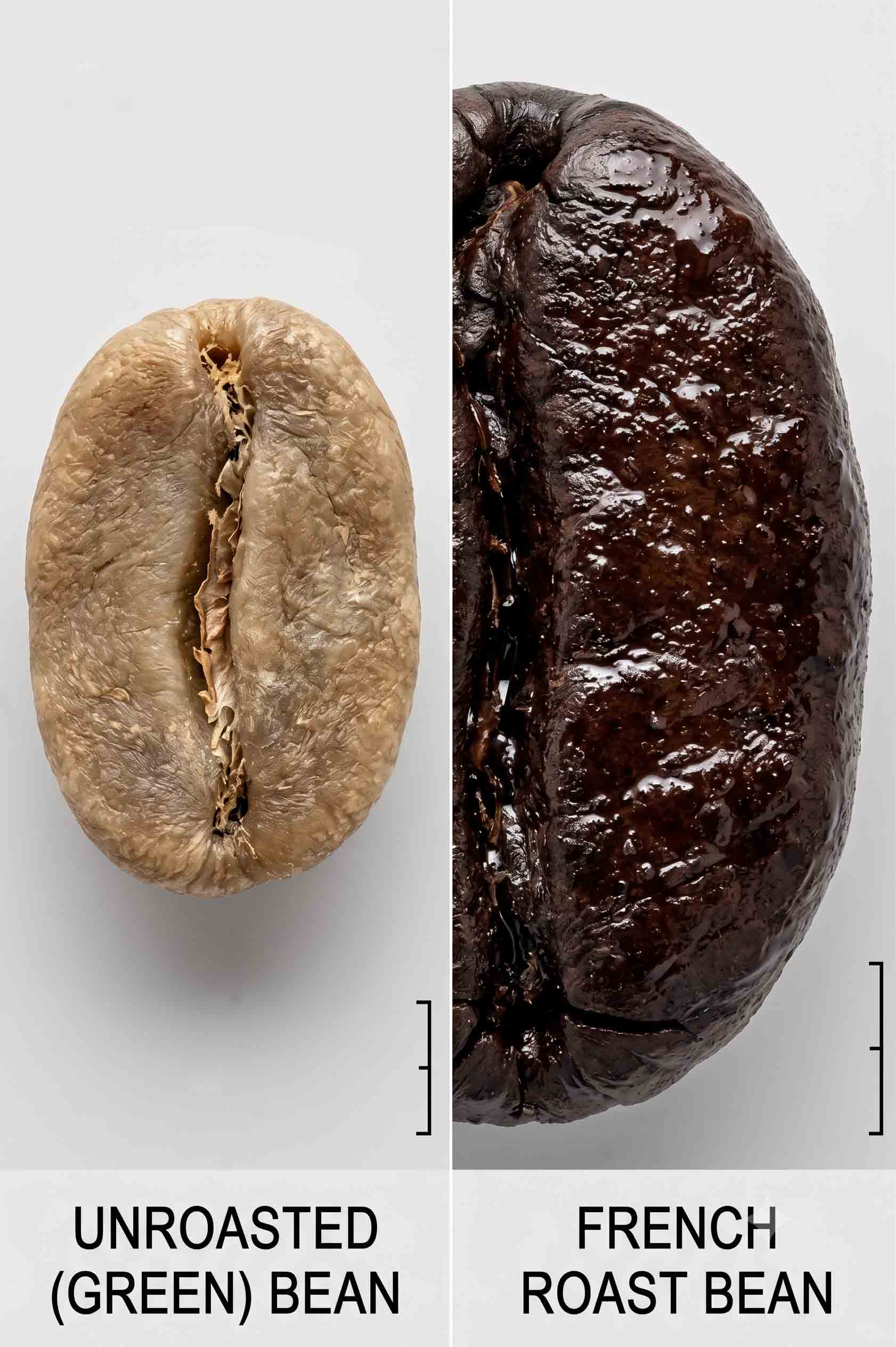
Packaging note: Roast level and bean density can affect the volume needed for a given coffee weight. Confirm pouch dimensions with a production sample and filling trial before full production.
Ground vs. Whole Bean: The "Slack Fill" Dilemma
Another technical variable is whether the coffee is whole bean or ground. Whole beans have a low "bulk density" because of the interstitial air space (the empty gaps between the round beans). When you grind coffee, you eliminate that air space, packing the 340 grams much tighter. If you put 12 oz of ground coffee into a bag designed for 12 oz of whole bean coffee, the bag will look under-filled. In retail, this is known as "slack fill," and it can negatively impact consumer perception.
Particle Mechanics: The Volume Black Hole of Grind Sizes
Even within ground coffee, volume changes drastically. If you grind 12 oz of coffee for an Espresso (extremely fine, powdery), the particles interlock perfectly, expelling almost all air. If you grind 12 oz for a French Press (coarse, like sea salt), the irregular chunks leave micro-voids of air. Therefore, a 12 oz bag of Espresso grind will look noticeably flatter and smaller than a 12 oz bag of French Press grind, simply due to the physics of bulk density packing.
The Decaf Difference: Does Decaf Weigh Less?
Decaffeination processes (like the Swiss Water Process) alter the cellular structure and moisture retention capabilities of the raw green bean before it even hits the roaster. Decaf beans tend to roast faster and expand slightly differently, often resulting in a slightly lower bulk density. This means 12 oz of decaf may take up a fraction more space than standard caffeinated beans of the same roast level.
2. The Mechanics of Bag Yield
Analyzing the Numbers in Practice
- The standard morning pot: If you are brewing for a family and wondering how many pots of coffee in a 12 oz bag, the answer is roughly 2.5 standard drip coffee maker pots (assuming a standard 12-cup carafe).
- The Pound Standard: When consumers ask how many cups of coffee in a 1 pound bag, the yield jumps to roughly 30 standard 8-ounce cups. This is exactly why heavy coffee drinkers and small offices prefer the 16 oz format over the 12 oz format—it guarantees a full month of daily single cups.
- The Commercial Giant: For cafes, restaurants, and corporate offices, calculating how many cups of coffee in 5 lb bag is essential for inventory management. At approximately 150 cups per bag, a high-traffic cafe might go through two or three of these wholesale bags every single morning just for their batch brewers.
3. The Economics of Coffee: Cost-Per-Cup Analysis
Yield is not just about volume; it is about money. For budget-conscious consumers trying to break their $5-a-day cafe habit, understanding the cost-per-cup yield of a 12 oz bag is eye-opening.
Let's assume you purchase a premium, specialty-grade 12 oz bag of coffee for $18.00.
- At 22 standard cups per bag, your true cost is exactly $0.81 per cup.
- Even if you brew heavily concentrated cold brew and only get 15 cups, your cost is still just $1.20 per cup.
When you compare $0.81 against a $4.50 drip coffee at a chain cafe, a single 12 oz bag of specialty coffee yields roughly $80 to $100 in retail value. For cafe owners and roasters, this highlights exactly why preserving the freshness of those beans in premium, high-barrier bags is worth the investment. Every stale cup thrown away is pure lost profit.
4. The Chemistry of Extraction: How Brewing Methods Alter Yield
The calculations in the chart above assume a standard automatic drip coffee maker. However, the exact number of how many cups of coffee from a 12 oz bag you actually get will fluctuate wildly depending on your preferred brewing apparatus.
Different methods require different Total Dissolved Solids (TDS) targets and Extraction Yields (EY), forcing you to alter your coffee-to-water ratio.
French Press & Cold Brew (The Heavy Extractors)
Immersion methods like the French Press and Cold Brew rely on steeping rather than percolation. Because the water is not constantly flowing through the grounds, you need a much coarser grind and a significantly higher coffee-to-water ratio (often 1:12 for French Press, or 1:5 for Cold Brew concentrate) to extract the proper flavor compounds without over-extracting bitter tannins.
- Yield Impact: You will burn through your bag much faster. You might only get 14 to 16 standard cups of coffee from a 12 ounce bag when brewing exclusively with a French Press.
Pour Over (Chemex, V60, Kalita Wave)
Pour-over methods are highly efficient. The continuous flow of fresh, hot water across a medium-fine grind allows for excellent extraction efficiency. This allows you to use a slightly more conservative, highly precise ratio (usually exactly 1:15 or 1:16).
- Yield Impact: You will get a very consistent, standard 20 to 22 cups per 12 oz bag.
Espresso (High Pressure, Low Volume)
Espresso chemistry is entirely different. It uses highly pressurized water (9 bars) forced through a compacted puck of very finely ground coffee. A standard modern double shot (doppio) requires a high dose of about 18 to 20 grams of coffee.
- Yield Impact: Since one double shot uses 18-20g, a 12 oz bag (340g) will yield roughly 17 to 18 double shots of espresso.
🧊 Extreme Science: How Cryogenics (Freezing) Increases Your Yield
In the cutting-edge world of specialty coffee science, a recent breakthrough involves grinding coffee beans straight out of the freezer. Cryogenically frozen coffee beans shatter much more cleanly and uniformly in a burr grinder, drastically reducing the amount of "boulders" (chunks) and "fines" (dust). This perfect particle uniformity significantly increases your Extraction Yield (EY). The result? You can theoretically use 16 grams of frozen coffee to achieve the exact same flavor intensity that would normally require 18 grams of room-temperature coffee. By freezing your beans in a high-barrier, airtight Mylar bag, you can literally "hack" the physics of your coffee and stretch a 12 oz bag to yield 10% more cups!
5. Beyond the Scale: Scoops and Tablespoons
While specialty coffee culture preaches the gospel of the digital gram scale, the reality is that many consumers still rely on traditional volumetric measuring tools to portion out their morning brew. If you do not have a scale, here is the exact volumetric breakdown:
- How many tablespoons in 12 oz bag of coffee? There are approximately 64 level tablespoons of ground coffee in a standard 12 oz bag. If you use the classic "2 tablespoons per cup" rule, this aligns perfectly with our 32-cup (6oz) estimate.
- How many scoops of coffee in a 12 oz bag? A standard commercial coffee scoop (the plastic or metal ones often included with coffee makers) holds exactly 2 tablespoons (about 10.6 grams). Therefore, you will get roughly 32 standard scoops from a single 12 oz bag.
Warning: Using scoops is highly inaccurate for whole bean coffee due to the air space between beans. Always grind your coffee first before measuring with a scoop or tablespoon.
6. The Bean Count & Caffeine Yield: The Hardcore Data
If you really want to get into the weeds, let's look at the actual bean count. How many individual coffee beans are you actually buying when you pick up a bag at the grocery store?
To calculate this, we must look at the average mass of a single roasted coffee bean. While Arabica beans are generally larger than Robusta, an average roasted medium Arabica coffee bean weighs approximately 0.13 grams.
Using this average mass, we can calculate the exact bean count for various global sizing standards:
- How many coffee beans in a 12 oz bag? (340g ÷ 0.13g) ≈ 2,615 beans
- How many coffee beans are in a 1 pound bag? (454g ÷ 0.13g) ≈ 3,492 beans
- How many coffee beans in a 250g bag? (European standard) ≈ 1,923 beans
- How many coffee beans in a 1kg bag? (Global metric) ≈ 7,692 beans
For an 18g espresso dose, that works out to roughly 135 to 140 beans, depending on bean size and roast.
The Caffeine Yield
What about the active ingredient? Arabica beans generally contain about 1.2% to 1.5% caffeine by weight. This means a standard 12 oz (340g) bag of Arabica coffee contains roughly 4,080 to 5,100 milligrams of caffeine in total. Divide that by 22 cups, and you get a very standard 185mg to 230mg of caffeine per cup.
🌍 The Environmental Yield: The Water Footprint of 12 Ounces
When holding those 2,615 beans, it is humbling to consider the agricultural weight they carry. According to data from the Water Footprint Network:
- The Global Average: The Water Footprint Network calculates that it takes approximately 140 liters of water to grow, process, and transport the beans required for a single 125ml standard cup of coffee.
- The 12 oz Reality: Since a 12 oz bag yields roughly 22 cups, that single bag of coffee represents a staggering Water Footprint of 3,080 Liters of global water resources!
For eco-conscious consumers, throwing away stale coffee is no longer just a financial waste; it is an environmental tragedy. This is where the intersection of yield and eco-friendly packaging becomes critical. By utilizing high-barrier recyclable or compostable bags equipped with degassing valves, roasters can ensure that the massive agricultural footprint required to produce those 12 ounces is honored and preserved, rather than staling on a pantry shelf.
7. The "Usable" Yield: How Freshness Decay Steals Your Coffee
There is a massive difference between "mathematical yield" and "usable yield". You might mathematically get 22 cups out of a bag, but if it takes you 4 weeks to drink it, those last 5 cups might taste so stale and oxidized that you throw them away. Staling actively reduces your yield.
Freshly roasted coffee naturally releases carbon dioxide (CO2). To prevent the bag from exploding, premium coffee bags use a One-Way Degassing Valve. This valve allows CO2 to escape without letting yield-destroying oxygen in. If you buy coffee in a cheap paper bag without a valve or zip-lock, oxidation will destroy the flavor profile within days, forcing you to use more coffee grounds just to extract some semblance of flavor.
8. Advanced Packaging Engineering: Anatomy of a 12 oz Bag
When retail consumers ask how big is a 12 oz bag of coffee or how big is a 5 lb bag of coffee, they are usually thinking about the outside dimensions to see if it will fit nicely in their kitchen pantry.
A standard 12 oz stand-up pouch is typically 130mm W x 200mm H x 70mm D (5.12" x 7.87" x 2.75"). But why exactly are these dimensions the global standard? Here is the math behind this packaging geometry:
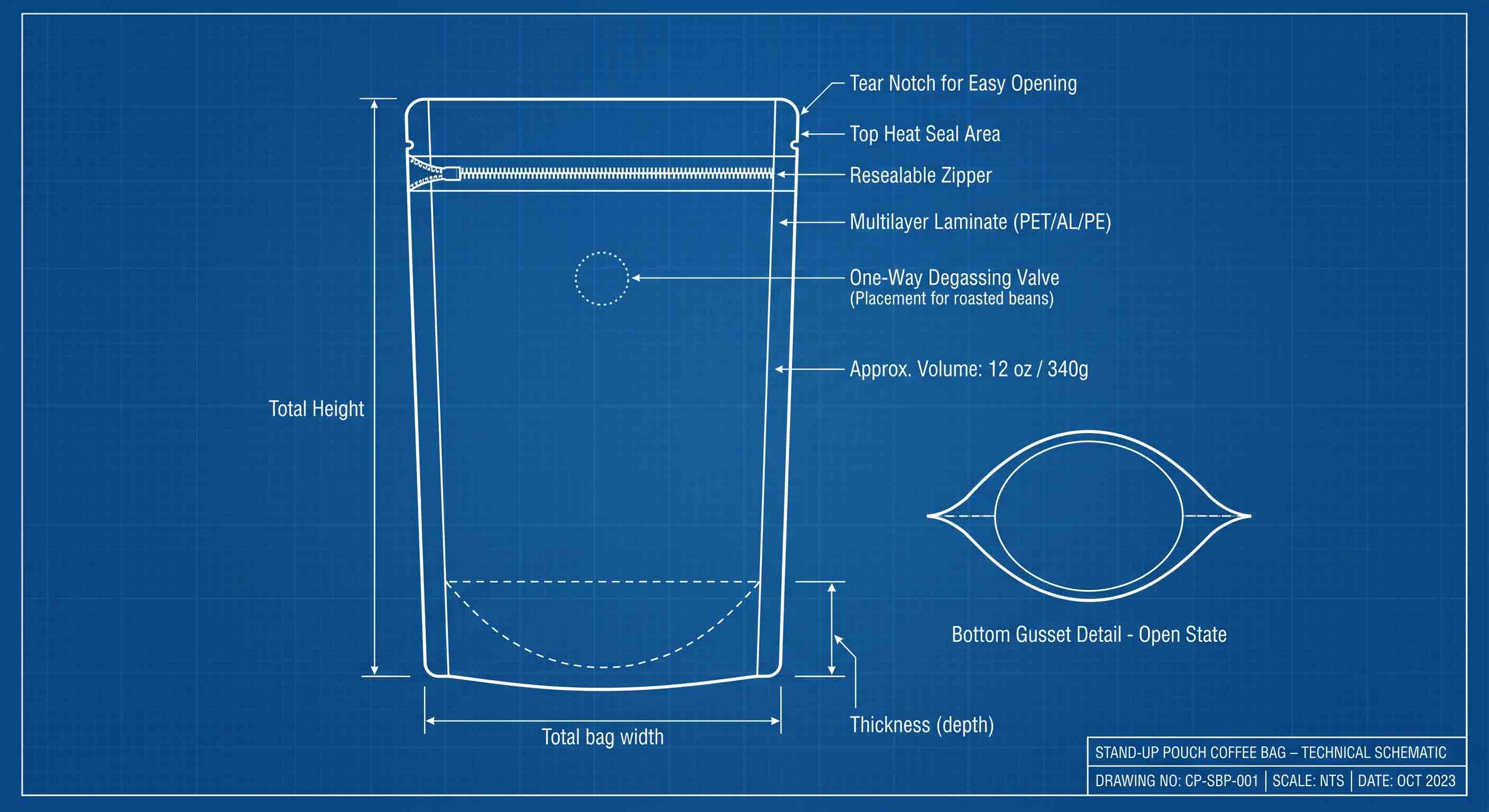
- The 70mm Gusset: The bottom fold (gusset) is exactly 70mm to create the perfect center of gravity. When filled with 340g of beans, this ratio ensures the bag stands upright on a supermarket shelf without tipping forward.
- The 30mm Zipper Clearance: The resealable zipper is placed exactly 30mm from the top edge. This is not arbitrary; it provides just enough clearance for commercial heat sealers (running at 160°C) to hermetically seal the top without melting the zipper mechanism below it.
The OTR/MVTR Trade-off
But for roasters and B2B coffee brands, the internal capacity is what truly dictates how much coffee actually fits under that sealing zipper. And that internal capacity is heavily influenced by the thickness and rigidity of the barrier materials used to preserve the coffee.
To keep coffee fresh and maximize the "usable yield," bags must have a low Oxygen Transmission Rate (OTR) and Moisture Vapor Transmission Rate (MVTR). Thin paper bags have terrible OTR. To fix this, premium brands use multi-layered metallized films (VMPET) or pure aluminum foil (AL) laminated with polyethylene (PE).
While these premium multi-layer materials can be specified to reduce oxygen transmission, they are notably thicker and more rigid. Interestingly, this extreme focus on barrier properties and odor-locking is exactly why the specialty coffee industry shares its core packaging DNA with the dispensary sector. The same multi-layered Mylar technology engineered to trap the volatile aromatics of a dark roast is the identical standard legally required for high-end custom cannabis packaging.
Packaging note: Material stiffness and pouch geometry can affect usable fill volume and sealing clearance. Confirm bag dimensions with a production sample and filling trial before full production.
9. The Global Shift: Grams vs. Ounces in Specialty Coffee
If you look at third-wave specialty coffee roasters around the world, you will notice a distinct trend: the shift away from imperial ounces and towards the metric system (grams and kilograms).
- How many grams in a bag of coffee? A standard 12 oz bag is exactly 340.19 grams (universally rounded to 340g in the industry).
- How many oz is a bag of coffee beans in Europe? In European, Australian, and Asian markets, the standard retail size is a 250g bag, which equates to roughly 8.8 ounces.
Using grams is vastly superior for coffee brewing because it allows for absolute, repeatable precision. When you are measuring how many cups in 12 oz coffee bag, using a digital scale set to grams ensures you are hitting that perfect 1:15 Golden Cup ratio every single time. It completely eliminates the volumetric inaccuracy of using scoops or tablespoons, which can wildly over-extract or under-extract your expensive specialty coffee.
Frequently Asked Questions (FAQ)
How big is a 12 oz bag of coffee?
A standard 12 oz stand-up pouch is typically 5.12 inches wide, 7.87 inches high, and 2.75 inches deep (130x200x70mm). However, internal capacity changes based on roast level and material thickness.
How big is a 5 lb bag of coffee?
A typical 5 lb coffee bag used by wholesale roasters has dimensions of approximately 6.7" W x 13" H x 4.7" D (170 x 330 x 120 mm). It is almost exclusively styled as a side-gusseted pouch or box bottom pouch to stand securely on warehouse shelves and pallets.
How many cups of coffee in a 1 pound bag?
A 16 oz (1 pound) bag of coffee yields roughly 30 standard 8-ounce cups of drip coffee, or about 42 smaller 6-ounce cups, depending on your brew strength.
How many scoops of coffee in a 12 oz bag?
There are approximately 32 standard coffee scoops in a 12 oz bag. A standard coffee scoop holds about 2 tablespoons (10.6 grams) of ground coffee.
How many cups of coffee in 5 lb bag?
A 5 lb commercial bag of coffee yields approximately 150 standard 8-ounce cups or 210 smaller 6-ounce cups. It is the perfect size for busy cafes and offices.
How many cups of coffee from 12 oz bag using a French Press?
Because a French Press is an immersion method requiring a stronger brew ratio (often 1:12), you can expect to get fewer cups. A 12 oz bag will typically yield around 14 to 16 standard 8-ounce cups.
How many cups of coffee in a 12 ounce bag for cold brew?
Cold brew requires the highest ratio of coffee to water (often 1:4 or 1:5 to create a potent concentrate). A 12 ounce bag will typically yield about 48 to 60 ounces of cold brew concentrate. Once diluted, this yields about 12 to 15 standard cups.